Where Airline Pilots Stand in Labor Statistics
 Given the recent reports of job growth and the enduring discussions about pilot shortages, I moseyed over to the Bureau of Labor Statistics to see which occupations are ascending and which are in decline and where airline pilots show up on that spectrum.
The good news is that airline pilots are not on the list of Fastest Declining Occupations. Topping this list of 30 occupations is “fallers,” you know, the people who cut down trees. By 2022 their numbers are expected to decline 43.3 percent. And there doesn’t seem to be much future at the post office, either. Postal clerks, mail sorters/processors, mail carriers, and postmasters and mail superintendents all made the list the changes ranging from 31.8 to 24.2 percent.
The bad news is that airline pilots aren’t on the list of the 30 Fastest Growing Occupations. By 2022 the number of industrial-organizational psychologists is expected to grow by 53.4 percent. Of the remaining 29 occupations, 20 of them are in medical fields from physical and occupational therapists to nurse practitioners, audiologists, genetic counselors, and a selection of aides and assistants. Substance abuse and behavioral disorder counselors are expected to grow by 31.4 percent.
The job outlook for Airline and Commercial Pilots through 2022 is pretty much in stasis at — 1 percent change. But that’s for the entire group. The BLS expects the employment of airline pilots, copilots, and flight engineers to decline 7 percent by 2022. The number of commercial pilots, on the other hand, is expected to grow by 9 percent. To put these numbers in context, the BLS says average growth rate for all occupations (in all fields) is 11 percent.
 Most of the airline job opportunities will be filling the seats of those who retire. As it’s been for eons, when some old captain retires, everyone moves up a number on the seniority list and there’s an entry-level seat at a regional airline, which pays around $20,000 a year. The BLS figures for airline and commercial pilot pay look pretty good, especially in comparison to “All Occupations,” but remember that these are median numbers, where half of those so employed earned more and the other half earned less.
Naturally, the bureau’s statistics for the future need for commercial and airline pilots apply only to American employers. The job prospects seem much rosier for those pilots willing to relocate to the Pacific Rim. According to an AP story in the New York Times, in the next 20 years the Pacific-Asia region will need 216,000 new pilots, which is more than twice the total number of commercial and airline pilots working in the United States today. But as is the case for all the world’s airlines, focus on the bottom line restrains wages that have not kept pace with the cost of training, an imbalance that causes aspiring pilots to think twice about their futures. — Scott Spangler, Editor
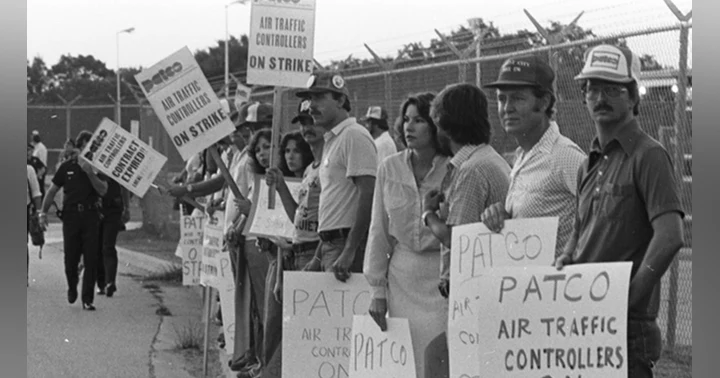
ATC: 45 Years After the PATCO Strike