A Complex (Airplane) Question
After reading last week’s post, NPRM Points to Flight Training’s Future, Jason Blair, the executive director of the National Association of Flight Instructors (NAFI), called early the morning it arrived in his email box. He was off to DC, he said, to meet the with John Lynch, who’s been the FAAer on point for pilot training and certification issues for more than two decades.
 Jason kept his promise to call back with any news from that meeting. Nothing would be set in stone until the FAA published the final rule, but it would seem that the changes outlined would come to be as proposed. But that wasn’t the interesting part of our conversation.
Jason brought up the point that if new commercial pilots didn’t need training in a complex airplane, that means flight instructors would not have any training in them either. And for the next half hour we discussed the pros and cons of training pilots and flight instructors to fly complex airplanes, those with constant-speed props and retractable gear.
What makes something pro or con is a subjective evaluation, so I won’t assign labels to the topics we discussed, including: a lack of aircraft diversity among CFIs, the savings of not having to maintain a middle-aged retractable single for a handful of pilots.
 That led us to the realization that airframers today don’t make a lot of retract singles, and most of them–the Bonanzas and Mooneys and multi-seat Pipers–would be unaffordable, uninsurable complex airplane trainers. Piper still makes the Arrow, and according to GAMA, in 2008 Piper delivered exactly one PA-28R-201.
We hung up before fully exploring the topic of safety. From his perspective as an instructor, Jason worried about gear-up landings. Under the new regs, a CFI checkout in a complex airplane might be just three circuits of the the patch, and would that be enough to keep student and teacher safe?
Thinking about it later, I’m sure it would because, in most cases, the “student” would be the complex airplane’s owner, a pilot conditioned to lower the gear before landing. With no complex requirement for commercial pilot applicants, the safety question of retract experience for CFIs seems moot.
 Surely, the commercial ticket’s complex time would be better invested in advanced instrument training, and accident data seems to support this. Compared to weather-related accidents, many of them fatal, the number of gear-up landings is minute, and all non-fatal. In the new century of powered flight, it seems that digital technology has superseded last century’s mechanical innovations.
Really, the complex question seems to be vanishing with the fleet of complex airplanes because their replacements offer equal–or better–performance with fixed gear. Jason then asked why this trend didn’t extend to twins. The answer came to me after I hung up: Certificating a new airplane costs a lot of money and there’s no return on that investment with a piston twin. Turbines, on the other hand…well, it seems worth the investment for Viking Air to resume production of the Twin Otter. — Scott Spangler
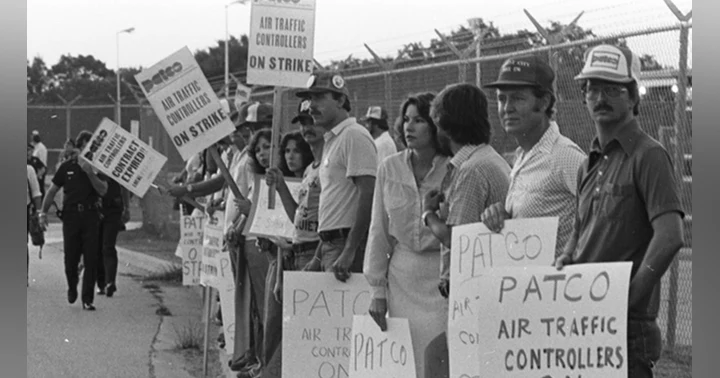
ATC: 45 Years After the PATCO Strike