A Glimmer of Light Ahead for the Aviation Industry

For the thousands of us who call the aviation industry home, 2020 turned out to be a year we’ll be glad to see the end of although the change of calendars won’t wipe away many of this year’s problems. The highly-contagious coronavirus wreaking havoc on our planet stuck its ugly tentacles into nearly every aspect of life on Earth this year. The result has been people fleeing airline travel and anything related in unprecedented numbers. Airlines around the globe reacted by parking thousands of airplanes and furloughing employees as demand dropped to rock bottom levels. Thousands of others lost their jobs as commercial aircraft production nearly ground to a halt with the fallout moving downstream tearing the hearts out of many industry suppliers as it went. And all this in addition to the grounding of Boeing’s 737 Max back in March of 2019.
The much hoped-for follow-on aid from the US government recommended by economists on both sides of the aisle never materialized once paycheck protection funding ran out. Except for the stock market, the US economy sank into the worst recession since the Great Depression with food banks overwhelmed by the millions of other Americans out of work. Congress, at each other’s throats most of this year failed to be of much help. First-line health care workers, noble enough to risk their lives to help back in March, are now exhausted with no relief in sight.
Within a few months of the virus’ emergence, the commercial airlines made their best efforts to trim transmission by demanding everyone who did fly should wear a mask. The FAA decided such a rule was beyond the scope of their mandate. Interestingly hundreds of people have been permanently banned from some US airlines for refusing to don a mask claiming their right to personal freedom trumped any airline or public health demands.
Business and general aviation picked up some of the travel slack this year as people wealthy enough to use private aviation switched to a sector where they had better control over the potential transmission of a virus that is currently killing between 1,500 and 2,000 Americans each and every day. But without a permanent solution, like a vaccine, or something to absolutely convince people it’s once again safe to climb onboard a commercial airplane, the airlines and the rest of the industry are expected to spend years digging their way out of the billions of dollars in losses they’ve already experienced.
Help on the Way

Groundbreaking news surfaced over the past few weeks that might offer hope to this and many other travel-related industries with the announcement of two vaccines that are nearly ready to begin wrestling the virus to its knees. Thanks to the help of the Trump Administration’s Operation Warp Speed, Moderna created a vaccine they claim is 95 percent effective in preventing the coronavirus. Pfizer has also unveiled a new coronavirus vaccine.
While this is great news, it doesn’t mean we’ll soon be back to hopping on an airliner for a week in the Caribbean. Even working around the clock, the vaccine production facilities can only crank out so much product in a day meaning initial doses won’t be available in significant numbers before the end of the year. Then there’s the time delay to transport vaccines to the millions who need it. Since there’s been no plan from the federal government on much of the work ahead, it’s unclear how the initial doses will be handed out. Some believe the elderly and hospital first responders should be first in line, but again, guidance varies from community to community. The Centers for Disease Control says the nation needs about 70-75 percent of the nation vaccinated in order for the vaccines to be truly effective.
There are additional logistical hurdles to transporting these vaccines too. Pfizer’s for example requires temperature-controlled facilities able to store products at 30 to 40 degrees below zero. These probably exist in some urban areas, but in smaller towns, not so much. Moderna’s vaccine doesn’t appear to be quite so temperature sensitive. The CDC estimates it could be mid-to-late 2021 before everyone who wants a dose will be able to receive one but at least the existence of the vaccines represents a huge step in the right direction.
Another problem with the lack of a federal plan is the US will continue losing a thousand or two Americans each day. The current loss stands at about 256,000 dead. Of course, we haven’t spoken to the huge segment of the population who refuse to wear a mask under any circumstances believing the virus itself is a hoax, simply a political tactic created to make President Trump look bad.
Also certain to slow the return of air travel to anything resembling normal are the thousands of passionate Americans who believe injections of any kind are fraught with more hazards than they’re worth. These people aren’t just turning their collective noses up at Pfizer’s and Moderna’s latest discovery, they don’t believe in vaccinating themselves or members of the family against anything … polio, measles, chickenpox, or even the common flu. While it’s their right to refuse, this issue creates a huge public health issue for a nation trying to make its way to that 75 percent vaccination number. Without some kind of nationwide immunity, chances are slim mask-wearing aboard aircraft will disappear anytime soon. Many Americans will simply sit tight until there’s an assurance that the risks of airline travel have significantly declined.
A Change in Washington
The US Presidential election was held a few weeks ago to decide if Donald Trump would win a second term or be required to hand over the reins of government on January 20 to Joe Biden to become the 46th President of the United States.
Despite a number of claims of voter fraud and numerous legal challenges by Mr. Trump’s defense team that have been turned back by the courts, again and again, Joe Biden won the election with more than 6 million popular votes, as well as the vast majority of the necessary electoral votes to be named President.
Joe Biden taking the oath of office on January 20, 2021, may mean some good news for the aviation industry, although, like the vaccines, Biden’s plans will take time to have any effect. Mr. Trump’s strategy to see America through the coronavirus translated into the President putting all his faith in the long-term benefits of anti-viral vaccines while ignoring the simple short-term tactics like emphasizing the wearing of masks, social distancing, and keeping gathering groups of people small.
President-Elect Biden plans a two-fold approach to the coronavirus chaos that will include planning on the long-term benefit of the vaccines AND the use of the more simple fixes such as wearing masks. The use of both of these tactics and those yet to be implemented can’t come a moment too soon if we’re going to slow the rates of infection that have exploded all over the country. Hospitals all over the country are also nearly full of the sick and first responders are exhausted from nearly nine months of non-stop work with no end in sight.
The Work Ahead
Campaigning during the 2020 presidential election highlighted two completely different perspectives on pretty much the same facts, except it became clear early on that either we weren’t all looking at the same facts, or some people interpreted what they saw and heard much differently.
And while Americans on both sides of the aisle cringe whenever they hear the phrase, “work together,” it’s the only strategy that will cut the heart out of the coronavirus, in addition of course to the use of vaccines, masks, and social distancing. None of this will work if we remain firmly planted in the us vs. them camps we’ve seen the past decade. If people don’t do their part to help as we’ve always done in the past when we’ve faced a major crisis we’ll easily see nearly a half-million Americans die between now and next spring.
By next summer, we hope the vaccines and a new administration in Washington will be on their way to overcoming the virus. Once Americans begin to see the risks and the number of deaths decline from the use of all these tactics, we’ll also be on the way to a significant, lasting improvement in air travel.
Rob Mark, Publisher
This story was edited on November 23rd at 8 p.m. CST.
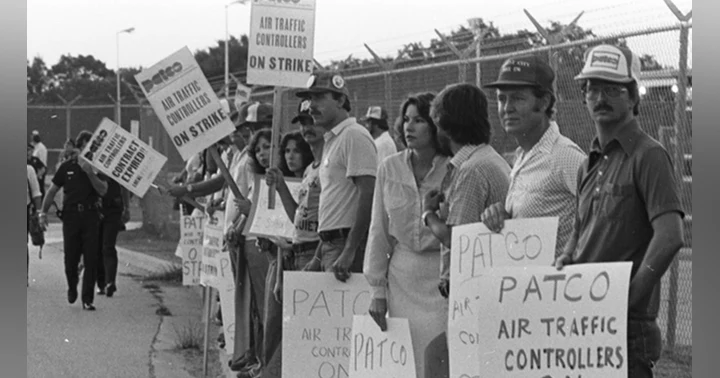
ATC: 45 Years After the PATCO Strike