Airlines and Ashes
 With tens of thousands of travelers stranded all over much of the Western Hemisphere still trying to either get to or from major European destinations last week, airline management became understandably tense at what was indeed the worst travel crisis since 9/11. The Chicago Tribune reported that of the U.S. airlines, Delta lost the most during the standoff with nature at about $30 million. All together, U.S. airlines lost well over $100 million, a pittance though when compared to the entire industry. The International Air Transport Association said the final number would be close to $2 billion, not a surprising amount when you consider that London Heathrow – the busiest airport in Europe – was shut down for a week. Imagine ORD, or LAX or JFK shut down … not slowed down, but completely shut down!
So again, no surprise that the airlines wanted action to remedy the situation quickly. It only took a few days before most CEOs began pointing fingers at the EU claiming they were being too conservative by shutting down most Northern European airspace. Problem is that there is very little research around on how much ash a turbine engine can stand before it shuts down. We know the worst case when a KLM 747 lost all four engines after flying in to the ash cloud from a Mt. Redoubt eruption. No injuries – at least physical – when the pilots got the motors humming again after a 13,000 foot fall.
There’s absolutely nothing worse for airline personnel to be grounded for reasons they can’t control, or even explain. That’s why Lufthansa sent out a specially equipped A 340 last week to test the ash. It returned unscathed prompting the question about whether it might not be OK for others to tempt fate.
Maybe it might have been OK in the end to fly closer. But then again, maybe not. The point the airline folks are missing is they we – the guinea pigs back in seat 37C – are not motivated by the same sense of urgency to find out as the CEO of a company with 250 idle aircraft gathering dust.
Nor should we be.
Volcanic eruptions are not new. The problem is they are quite rare. With our newly found short-term memory issues, we humans often tend to put issues like volcanic research on the back burner until the next time it pops up. We just never thought it could wreak such havoc as we saw last week.
Honestly though, we should call last week’s eruption and the resulting urgency need to fly and put cash in the kitty what it really is, a cost of doing business to the airlines, just as my choosing the wrong solution to a marketing problem that results in lost customers might be one of mine. It simply comes with running an airline.
So it’s probably time for the airlines to ante up for a little volcanic research after this mess is over. Just do we passengers a favor … let’s get some solid data in the kitty before you try to tempt the ash gods with me flying along in the back seat. I only asked for an airline ticket, not a potential thrill ride. I mean really … do you know how fast an 747 descends when all four are shut down? Neither do I. And I don’t want to find out either.
Rob Mark
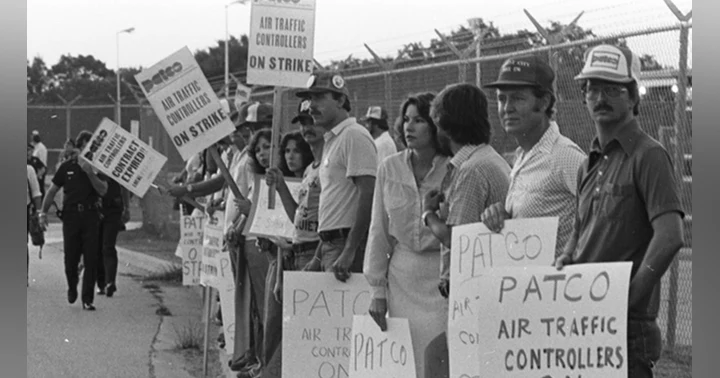
ATC: 45 Years After the PATCO Strike