Airlines Have Always Had More Service Solutions Than Customers Realize
Airline passengers painfully canned in a jet parked just a few feet from freedom have been a part of the airline business for years. But the airline industry’s current house of cards involving JetBlue and American Airlines evolved initially from huge load factors – the percentage of seats filled on any given flight – that have climbed beyond the comfort level even for the airlines, as well as fewer equipment and people backups. This all translates into severely reduced flexibility operationally and lots of finger crossing hoping that nothing else, like the weather, turns sour.
The massive black eyes JetBlue received this week for its abominable treatment of customers detailed by The Chicago Tribune won’t be the last you’ll read about this sort of thing. Indeed, it was just a few months ago that American Airlines experienced similar route chaos.
Even prior to the JetBlue fiasco and that airline’s apology online and in dozens of national newspapers however, there were calls for a Passenger
 Bill of Rights, a document to outline what airlines could or should do in case its managers again forget that customers might actually not enjoy a day in airline jail.
But the airlines already have a few tricks at their disposal that could well have prevented, or at least lessened the pain for travelers on Valentine’s Day. The airlines are also praying passengers don’t even think about them.
Here’s one.
All pilots, whether commanding a Boeing 747 for United, an Airbus for JetBlue or a small Cessna from a local reliever airport operate under a set of Federal Air Regulations (FARs). Each commercial airline adds to the FARs with their own internal procedures contained in an Ops (Operations)Manual, that focuses pilots on the airline’s way of thinking during everyday and unusual events.
In simple terms, FARs 91.3 says that the Pilot in Command of the airplane is responsible for the safety of the aircraft and the people on board and is allowed to do whatever he or she believes is necessary to keep that promise.
If you recall during much of the calamity at JFK recently, there were open gates to which some aircraft could have taxied rather than simply keeping people tied to their seats for eight to 10 hours. The pilot-in-command on any of these airplanes could have simply told the air traffic controller they were going to taxi back to an empty gate. Once parker, the pilots could have shut down the engines leaving the aircraft’s auxiliary power unit (APU) on forair and light and opened the front cabin door to deal with the problem.
Since that might have meant jumping to the jetway for one of the pilots, or using a rope to the ground – most of these airplanes don’t carry their own stairs aboard – so be it. Pilots should be trained on how to run a jetway to keep something like this from happening.
Would this be dangerous for the crew … a little, yes. But I’ll bet most pilots would try it if they didn’t think they’d get fired for trying. In retrospect, it doesn’t look like such a bad idea.
The Ops Manual I mentioned earlier offers airline crews precise written guidance during difficult times, such as bad weather.
If the cloud bases are lower than a preset number of feet above the ground, the crew can’t do anything except fly to another airport. And the airlines do this precisely so that during an emotional situation – like do I try to land at my intended destination or risk my company losing a considerable amount of money bussing people from 100 miles away – the crew has their answer in black and white with no further decisions needed.
Ask your airline representative the next time you book, what their Ops Manual policy says about one of their aircraft sitting on the ramp during a delay. My guess is you’ll find that none of them offer the pilots any guidance at all. In this case, the pilots simply interpret what they are told on the company radio channel and that’s often no more than, “We’ll get back to you as soon as we know something.” Then everyone sits.
It is time the airlines decided on something to end this kind of lunacy, guidelines we can all live with. The airline might, for example, set four hours of waiting as maximum. After that, the aircraft taxies back, no matter what and everyone deals with life from that point in time.
In the airline’s defense, some people will miss connections. But I’ll bet if you asked recent JetBlue or American passengers their preference, most would say set a time and go back to the gate … period.
I’m sure managers at American and JetBlue will be burning the midnight oil – if they haven’t begun already – to give pilots workable guidelines, not simply because it is good customer service, but because not acting on this time invites some dire consequences from passengers – yes, often some of the same people who are prone to road rage.
How long do you think it will be before one of these highly stressed folks trapped aboard the next inert airliner at JFK or LAX walks up to Row 14 and pulls open an Emergency Exit to deal with the problem themselves while the engines are still running?
No amount of apologies or refunds will cover the panic, the physical harm or the lawsuits that will surely follow.
Technorati tags: JetBlue, American+Airlines, Passenger+Bill+of+rights, pilots, Chicago+Tribune, airline+ground+delay, airline+emergency, airline+customer+service
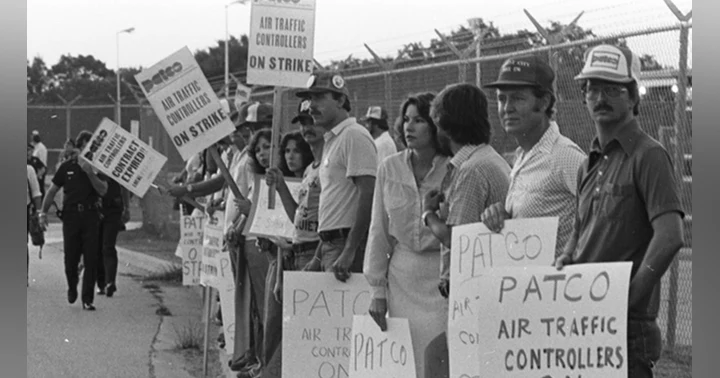
ATC: 45 Years After the PATCO Strike