Bomber 21? Why Not Build a Better B-52?
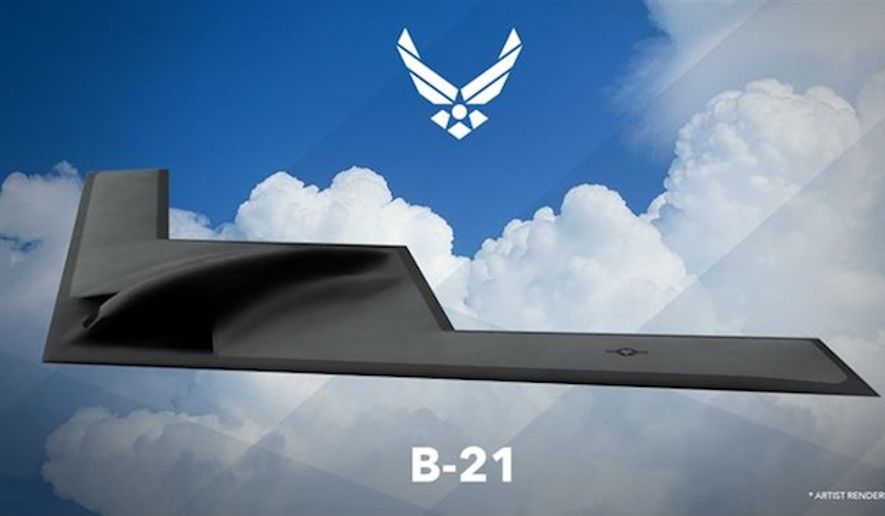 The U.S. Air Force opened the doors on its new, and as yet unnamed, long-range strike bomber, the B-21. The contract pasted in the cockpit window said each bomber would cost $500 million and the total program cost for a fleet of 100 B-21s would be $80 billion. Yeah, like that will happen.
Given the tradition of cost overruns and schedule delays, we can expect only two things with any certainty. First, the bomber will succeed the F-35 as the nation’s most expensive weapons program, and it will guaranteed a century of service for the B-52.
Like all the bombers that have come since B-52 entered service in 1955, the B-21 is supposed to replace the heavy-hauling daily driver of the bomber fleet. Brought to you by the same company that delivered the B-2 Spirit at $1.157 billion each, the B-21 will likely become another pampered plane, a winged Lamborghini, that only comes out of the garage when it’s a nice day.
If the Air Force is going to make a “better” B-2 with the B-21, why not get more for the taxpayer’s money by building a better B-52 by following the precedent set by the P-8 Poseidon, based on the Boeing 737, and the KC-46 Pegasus, based on the Boeing 767. Why call up the computer design files for the Boeing 787-9 Dreamliner and save them as the foundation for the new B-52? Given their sticker prices, we could get two for the price of one, at least until the “military discount” increases the 787’s price.
Comparing the available specs for the B-52 and 787, there seems to be a lot of opportunity. The B-52 can lift 70,000 pounds of ordinance as part of its 488,000-pound maximum takeoff weight and carry it 8,800 miles. The B-2 has a 40,000-pound ordinance capacity, a 336,500-pound max takeoff weight, and 6,897-mile legs without refueling.
 Naturally, there’s no ordinance spec for the 787-9, so let’s extrapolate. It will carry 280 passengers, so that 47,600 pounds at 170 pounds a piece. Then there is their baggage and those overstuffed overhead compartments. (Maybe an airline-savvy reader can share how the airlines compute this weight). Without refueling, the 787-9 will carry this load 7,635 miles. The point is, with a 280,000-pound useful load, there seems to be possibilities with the airframe.
And let’s not forget its fuel-efficient operation. As a bonus, the Air Force could forward deploy the B-787 to any commercial airport that now welcomes the airplane. It would not only same time, money, and fuel, it would drastically reduce the safety risks involved with the multiple midair refuelings—and pilot fatigue—that are the hallmark of B-2 missions that start and end at Whiteman Air Force Base in the middle of Missouri.
The B-bombers’ stealth capabilities seems an overpriced luxury these days. In unveiling the B-21, the Air Force implied it was essential to survive a “high threat environment.” Let’s get real. Vietnam was the last time U.S. bombers flew into a high threat environment. And as far as I know, that was the last conflict in which an American bomber, the workhorse B-52, was shot down.
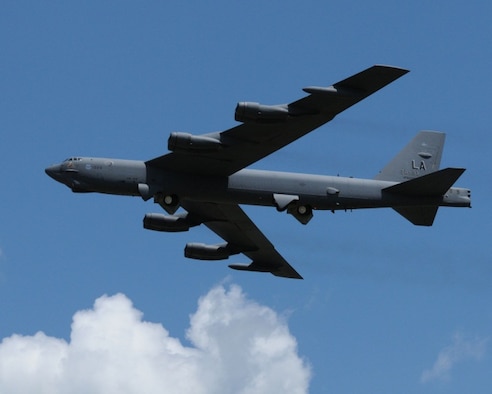
Given the economic and electoral consequences of conflict among the major players in the global economy, it seems unlikely that we’ll ever again see a cold war-era high threat environment. As the past 15 years have proven, the highest threat comes from an unknown individual with a backpack bomb and AK-47, and stealth tech will not protect us from that. Better to have a heavy hauler loaded with precision-guided munitions and enough gas to let it loiter for a long time.
And as I conclude my rant, I have one more question. Since September 18, 1962, the U.S. military has used the same sequential aircraft designation system. B is for bomber, so how do we go from the B-2 to the B-21? Asking Google about B-3, Wikipedia identified it as the long range strike platform seems to be the B-21.
B-3 also identified Army Air Corps biplane bomber, the Keystone, from the 1920s. But searching all the B’s thereafter revealed no new bombers of this century between the two. There was a BAT 21, but that’s a totally different story from another time now long past, when the B-52 was supposedly counting its final missions. — Scott Spangler, Editor
ATC: 45 Years After the PATCO Strike