Close Call in ABQ Center Airspace Raises Questions
If you’re a pilot and and watch the AOPA video of the rocket-run the F-16 pilots ran on a couple of civil airplanes in March, you’ll probably lose your lunch. A Beech Premier and a PC-12 were transiting a Military Operations Area (MOA) that the ABQ Center controller obviously realized was active when the fighter decided to make the two civil pilots aware they were not wanted.
 The aircraft came so close that the Traffic Collision and Avoidance System (TCAS) on the Premier generated first a Traffic Alert (TA) to warn of the impending conflict, quickly followed by a Resolution Alert (RA) demanding the pilot climb at a rate in excess of 3000 fpm to get out of the way. At cruise airspeed, that meant the Beech pilot probably squashed his passengers into their seats to avoid the fighter.
Pilots in both airplanes demanded FAA controllers offer up a way for them to complain about the shenanigans of the F-16 pilot when they realized the move were deliberate. My guess is the incident probably ruined the controller’s day too.
At lunch today with a bunch of other pilots I learned people don’t all understand MOA operations and what both pilots and controllers are expected to do. Question is, who’s correct?
Can you legally fly through an MOA on an IFR flight plan if the area is hot? Is it the controller’s responsibility to tell us the area is hot if we’re headed in that direction, or are is the pilot supposed to know and ask for avoidance? Whose airspace is the MOA, center’s or DoD’s? This all seems a bit gray to me and gray in Positive Control Airspace is not cool at all.
AOPA says FAA and the DoD are looking into the matter and that the F-16 pilot was whacked across the hands for the incident. What do you think?
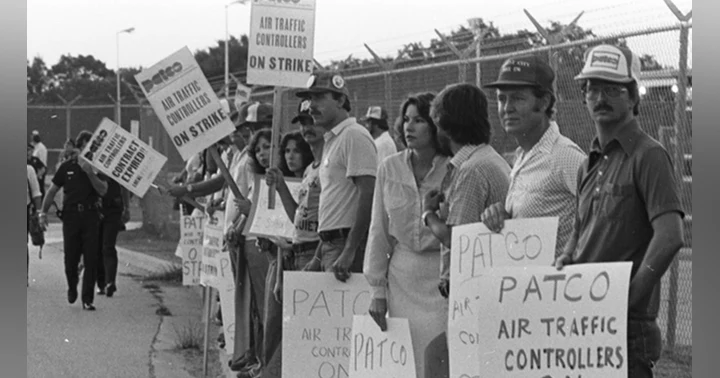
ATC: 45 Years After the PATCO Strike