Comair Pilots: Will The Union Strike … Should They?
The Comair Master Executive Council drew a line in the sand this week over a bankruptcy court’s approval to toss the pilot’s working agreement in the trash. If Comair management does throw out the contract, the pilots have promised a strike.
No threats, just a simple guarantee. No contract, no work.
If Comair management isn’t burning the midnight oil to avoid a work stoppage this holiday weekend, they should be. That Comair pilots voted 10 to 1 in favor of a strike should come as no surprise to anyone since these are many of the same pilots who shut the company down for three months in 2001.
Not surprisingly too, Comair management has threatened to pursue an injunction against the pilots for what it claims would be an illegal strike.
What seems to have gone unnoticed by aviation pundits, however, is just how often the strike word has been used in written and spoken rhetoric over the past year.
It’s not a coincidence.
Although there has not been a serious work stoppage in the airline industry since the 2001 Comair strike, the groundwork has been laid for a shutdown at more airlines than simply one Kentucky-based regional carrier.
Throughout the industry, pilots have simply had enough, especially regional pilots who are still viewed as second-class pilot citizens. They’ve had enough with management demanded givebacks on wage agreements that were meager to begin with, not to mention the added pressure from mainline code-sharing partners who threaten to give their jobs to a cheaper competitor if they don’t tote the line.
So while United pilots build strike committees to fatten their paychecks, Comair and Mesaba pilots have jumped into the battle in order to eat.
It’s no secret that unions are fairing poorly these days, but some of the blame rests directly with the rank and file themselves, as well as union management.
Twenty five years ago, it would have been unheard of for union pilots to stand idly by while the company trained non-union help on board revenue flights. But that’s exactly what Northwest tried to counter a possible flight attendant strike. Those days are over.
Although the Air Line Pilots Association has tried a non-combative, non-strike kind of strategy over the past ten years, many pilots – both mainline and regional – seem to have finally recognized the handwriting on the wall. Each time you give back something you’ve won, you also step back in labor relations losing a little more influence each time. Givebacks don’t satisfy management; they only feed their hunger for more.
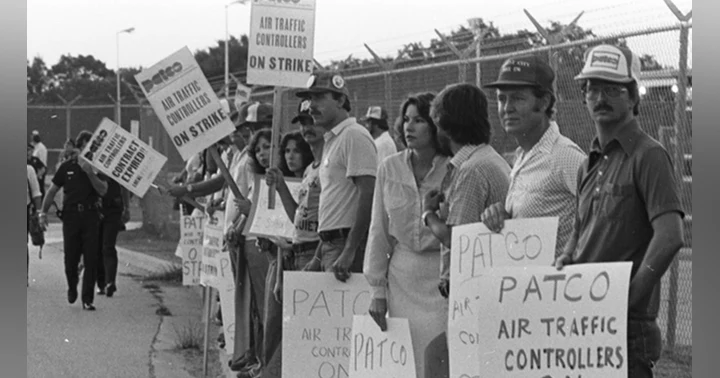
A hundred years Sam Gompers said, “I hope the day will never come when the workers surrender their right to strike.” So will someone please tell me why a work stoppage is illegal if the company destroys the bargaining agreement? Certainly a strike is never risk free. Ask a former PATCO controller and they’ll tell you a strike is only illegal if you lose.
I think pilots have finally realized that there is only so far a labor group can back up before it falls over the edge and ceases to be a labor organization. And regional pilots had little backup room to begin with.
Hopefully, they’ve also begun to realize that a union means standing together … regional pilots, mainline pilots and even members of other unions who affect the pilot profession.
Watch for pilots to turn the heat up even higher in 2007.
ATC: 45 Years After the PATCO Strike