Confessions of a New Corporate Pilot

Confessions of a New Corporate Pilot
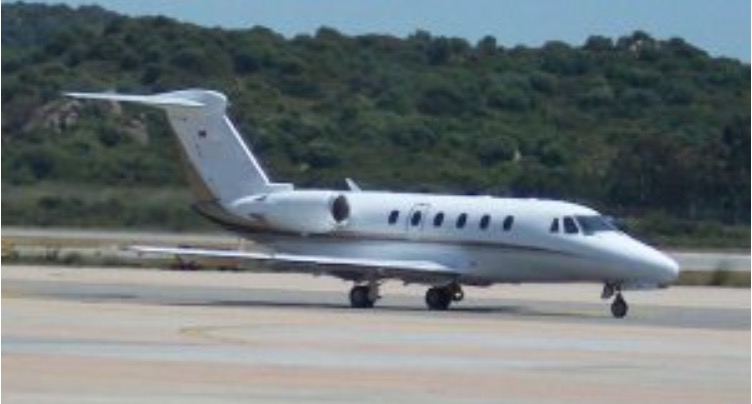
Life would be sweet, I thought, now that I’d successfully passed my Cessna Citation III (CE-650) type rating check ride (this was a few years back). It meant I’d be flying my first swept-wing jet. Surprisingly, my first day at the new job at Chicago Executive Airport (PWK) would also be the first time I’d been up close to a real Citation III since all the training and even my check ride happened in FlightSafety’s full-motion simulator.
From my research, though, I knew the 650’s cabin was roomy enough for eight, and its rocket-like performance was nothing short of spectacular with a VMO (maximum operating Mach) of Mach 0.85 and 39,000 feet on a standard day. In its day, M.83 was pretty fast. That meant we could make the West Coast out of PWK with four people in the back. I learned quickly, too, that the 650’s awesome performance meant I needed to stay much farther ahead of the airplane than I’d had to in the much slower Citation II (CE-550) I’d been flying in a 12-pilot charter department.
A privately held corporation owned this Citation III and I was the junior of three pilots. The chief pilot, my new boss, brought experience from several other flight departments, while the other pilot, I’ll call him Tom well, I was never really too sure where Tom had come from because the guy kept to himself as much as possible and wasn’t the chatty type. That made three-hour flights long when the entire conversation at FL390 ended with an occasional shrug of the shoulders.
But who cared what one guy acted like, I thought. I was there to learn how to fit into a flight department that needed another pilot on their team. Just like in charter flying, my job was to keep the people in the back happy. I came to know these passengers much better than we ever did in the charter world. These folks sometimes invited the flight crew to their home on Nantucket when we overnighted there.
The Interview
Looking back on this job now though, I guess the 10-minute interview the chief pilot and I engaged in before he offered me the job should have been a tip-off that maybe something was a little odd. But with a four-year-old daughter growing up at home, the chance to dump my charter department pager that always seemed to ring at 2 a.m. beckoned hypnotically.

Corporate line training began right away with me flying in all kinds of weather, where I regularly rotated flying left seat with the chief pilot and Tom. Having flown left seat on the Citation II, I wasn’t brand new to jets, just speedy ones.
After a few months, however, I began to notice a few operational oddities that started making me a little uncomfortable. Some sketchy flight planning and questions I asked were sometimes answered with annoyed expressions. If I appeared not to agree, someone might ask if I’d finished all the Jepp revisions (In those days there were no electronic subscriptions. Updates were handled by hand). I found the best solution for getting along seemed to be to just shut up and fly the airplane. Ignoring those distractions did help me pay closer attention to the little things that made my flying the jet smoother.
Then again … On one flight back from Cincinnati (CVG), I was flying left-seat with the chief pilot in the right. I wanted to add fuel before we left since the Chicago weather was questionable, but the boss overruled me explaining, “We’re fat on fuel.”I didn’t say anything. As we approached PWK, the ATIS reported the weather had worsened, considerably. The Swiss cheese holes began to align when Chicago Approach dumped us early. We ended up burning more fuel than planned. I flew the ILS right down to minimums, but my scan uncomfortably included the fuel gauges every few seconds. After a safe landing, we taxied in with 700 pounds of Jet-A, not much for an airplane that burns 1,800 pounds an hour down low. What if we’d missed at Chicago Executive Airport and needed to run for Chicago’s O’Hare International Airport I wondered? We’d have arrived on fumes. The boss looked at me after we shut down. “Don’t tell me that whole thing bothered you. It all turned out fine, didn’t it?”

Headed for La La Land
On another trip, Tom and I were headed to Los Angeles from Chicago. Tom’s flying philosophy was simple … go fast, all the time. But on this trip, he tried something I’d never experienced. He pulled the circuit breaker on the Citation’s over speed warning. This meant the airspeed indicator needle and the barber pole (the striped safety warning needle on the indicator) crossed in a way that was never intended and of course, removed the safety protections of the overspeed warning. Sure everyone flies jets nestled up to the barber pole, but not past it. Crossing that line meant we’d become test pilots and I didn’t like it.
Tom tried this on other flights too. “Does that bother you?” Tom asked me while we were level at FL410 at some airspeed beyond the pole. “Yeah. It does,” I replied. “Put the #@*&! circuit breaker back in and pull the power back,” I demanded. After a short argument, he complied and didn’t speak to me again for the next two and a half hours. I told the story to the boss when we got home and he told Tom not to try that again, although they’d both joke about it from time to time.
Maybe six months later, Tom and I flew a trip out West with an overnight at San Jose (SJC). Headed west I flew left seat into LAX and then SJC which was a great experience for me. The next morning the passengers showed up early. The weather was good VFR and I’d already started the APU and run most of the pre-start checks. Tom sat left seat as I called ground for taxi. As they rattled off taxi instructions to runway 30 Right, I tried to quickly scan the standard instrument departure (SID) that included a tight climbing right turn eastbound, followed by another turn at an intersection further down the way. At least that’s what I realized the SID looked like later, because we never briefed the departure before we took off. I’d barely had time to find the SID in the Jepp book because as we taxied out, Tom’s cell phone rang and he picked up. I’d never watched anyone try to steer a jet on the ground, manage the throttles, and talk on the phone at the same time. I kept waving to him as we approached the end of the taxiway and he kept waving me away, finally telling me to call the tower and tell them we were ready. “But Tom, we haven’t talked about the SID yet.”
“Just tell em we’re ready, will you!”
I complied, thinking it was his certificate. That was a big mistake on my part.
We blasted off and as the gear came up, Tom looked over at me and asked, “Which way am I supposed to turn?” All I could tell him was east because, of course, we hadn’t looked at the SID for specifics. I grabbed the paper plate and confirmed, “Turn right to the east for now,” I yelled. I tried to scan the SID for the most important information but departure kept calling traffic and I just couldn’t keep all the plates spinning.
Talk to Me SID
As we approached the critical intersection Tom said, “Which way do we turn when we get there?” I had no idea and at 200 kts., “there” was coming up pretty fast. I was overwhelmed trying to give Tom the right answer working the radios. Then he yelled, “We’re turning left up that radial.” Ten seconds later, the San Jose departure controller asked where we were going. That’s when I learned we were supposed to make a right turn at the intersection and continue climbing in a bit of a teardrop pattern before eventually heading northeast. My skin tingled with sweat as I realized I was just as much at fault as the guy in the left seat. When the controller said he had a phone number to call when we got back to Chicago, I imagined the torn pieces of my certificates floating down from the cockpit ceiling.
Not surprisingly, Tom and I didn’t say much to each other on the way back except that he made a point of telling me I’d screwed up. I, of course, pointed at him. Unbeknown to both of us, the passengers in the cabin had witnessed the entire show. When we arrived back home, I helped the passengers off the aircraft and brought them their bags. If they sensed the seriousness of the near calamity, they didn’t let on to us that night.
I looked at Tom and we both walked back into the hangar office. The chief pilot happened to be waiting, even though it was a late-night arrival. Had one of the passengers called him? When he saw my face, it must have been clear I was upset. He asked about the flight and I told him we needed to call the ATC supervisor in San Jose about a possible violation. I wanted to make the call but the boss gave the job to Tom. Somehow a few minutes later, Tom appeared and explained the supervisor at San Jose was going to let us off with a warning. I was in shock, but still breathed a huge sigh of relief.
The boss corralled Tom and me in the office a few minutes later sitting across the table from each other, with him in the middle. He looked at Tom. “What happened in San Jose?” Tom pointed to me and said that we’d almost earned a violation because I hadn’t been paying enough attention. I tried to explain the cell phone while taxiing thing, but the boss asked me to zip it pointing to my mouth.
I lost it. I tried to climb over the table at Tom, but the boss got between us. I pointed to Tom and said, “I’m never flying with this idiot again. Period.” I knew I was wrong for losing my temper, but the way the other guy so cooly pointed to me as the problem just blew my personal circuit breaker. I also thought about my family as I tried to cool down.
It was clear pretty quickly that this job was over. But I just wanted out as I thought about the craziness I’d experienced, fuel planning issues, circuit breakers, talking on a cell phone while taxiing for departure and a dozen other nutty events. I looked at my boss and said, “I’m done here.”And I never went back.
The good news was that the passengers, my certificates, and lived to fly again. The flight department dissolved about a year later. Tom? Yup, he got a chief pilot’s job flying a Falcon 2000 for another company on the field.
I learned quite a bit about flying at this company, but not all of it was good. The experience taught me that pilots must learn when to keep their mouths shut and when to speak up to keep the company and its safety culture in balance. Sure, the airplane never got broken, but who knows how close we came to an accident and for the silliest of reasons. Luckily, corporate flight departments have become much more professionally run since I flew that 650. One reason business aviation’s safety record has improved over the past few decades is through the efforts of the dozens of pilot volunteer members of the NBAA’s Safety Committee and type groups like the Citation Jet Pilots Association.
BTW – If you enjoyed this story and found it useful, please share it with a friend. If you received this story from a friend, why not subscribe to Jetwhine yourself. It’s free. Just click on the “Subscribe” at the top of our home page and add your e-mail.
This story is reprinted here courtesy of the Aircraft Owners and Pilots Association.
ATC: 45 Years After the PATCO Strike