FAA Solves ATC Staffing Crisis
It only took the agency a couple of years – actually about 10 I believe – but FAA has finally taken action on the problem of too many airplanes and two few air traffic controllers to keep them all apart. And before you ask, yes, the downturn in the economy has given the agency a shred of breathing space as traffic numbers have dropped off the past few months. But just like the quiet after 9/11, this latest respite will never carry the air traffic control system through for long. The new FAA computerized Next Gen ATC system is also at least a decade away from being of any use.
Clearly the agency was in a spot, especially since eternally-souring labor relations between the agency and NATCA air traffic controllers was taking a toll on personnel numbers by forcing experienced controllers to walk out the front door.
Anyway, the FAA needed to do something to solve the problem and quickly.
 The agency devised a new way of classifying controllers, a system designed to reduce the training time needed to certify an air traffic controller at a level where they are allowed to work without direct supervision. The reason for eliminating the need for direct supervision is that until a controller is completely checked out as ready to work all kinds of air traffic alone, it takes two controllers – one trainee and one trainer – to work the traffic it would normally take only one person.
So in the immortal words of Ross Perot, “Here’s the deal.”
In the old days the folks who worked up in the control tower only spent part of their day looking through those huge panes of glass at the surrounding scenery and airplanes. They also normally spent another part of their day in the radar room buried deep inside the belly of the control tower where their brains were used to keep airplanes apart using radar scopes. During training, a controller might be cleared to work in the tower unsupervised, but still need to learn the job in the radar room before they were no longer considered a trainee, at least technically. That training requirement often translated into years of effort to license a controller. And the failure rate along the way as a trainee is not pretty.
So here’s the new agency wisdom. Why spend all those resources training someone for two jobs – tower and radar room – when you can certify them for one job or the other in much less time. Hence you get them off the trainee roles, have more time to spend on other trainees and get Congress and the public off your back to boot. The FAA calls this streamlining.
To be honest, many of the largest airports around the nation are split already. O’Hare and Atlanta are set up that way. But that doesn’t mean the system works well. This solution has been tried before and was canceled when too many problems emerged.
One of the big problems is that when controllers become sick or want to take vacation, you can still be short of personnel, just as before. Perfectly capable air traffic controllers might be on duty in the tower, but be unable to help their comrades downstairs because they lack the training.
There is also an intrinsic value to a radar controller understanding the job of a tower controller and vice versa. It simply makes for a more efficient traffic flow when both people understand potential problems before they occur.
Finally, the new system is sure to increase an already tense labor situation, the last thing we need, because dual-rated controllers are normally paid more than their single-rated counterparts. It’s counterproductive – no wait, it’s silly – to assume that the people who control air traffic will simply go along with yet another new direction from the bosses for whom they already have zero respect, something the agency has managed to show controllers in return.
So does this new FAA system really solve the staffing problem? Probably not, although it does make it look like a solution is near. But really this is nothing more than an accounting technique. a bit of smoke and mirrors, a slight of hand, but really no more.
And old college professor told me once to be careful about making snap decisions like this, especially when plastering a long-term problem with a short-term solution something this whole streamlining program look like to me.
“Rush to an answer, especially one based on money,” she told me, “and you may find yourself solving one problem while creating one that could be even worse.” Next thing you know FAA will be trying some other kind of craziness to cut training costs.
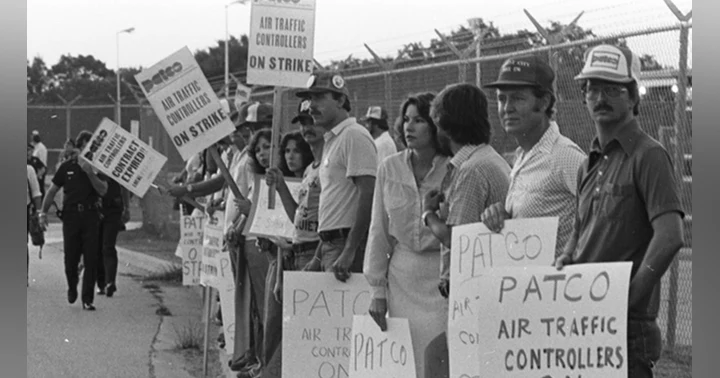
ATC: 45 Years After the PATCO Strike