Flying Demands Keeping Your Head in the Game
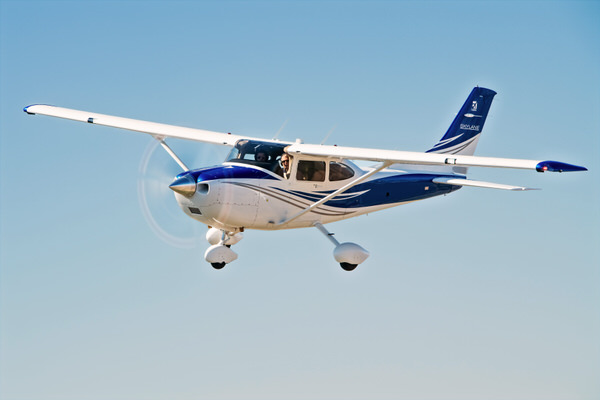
Pilots get rusty when they don’t fly often. No matter whether they hold a private pilot certificate or an ATP. Even a professional pilot with thousands of hours in their logbook can easily find themselves behind the power curve in an airplane. Staying current keeps you legal with the feds, but being proficient is what will keep you out of serious trouble when you’re actually flying the airplane.
After my two-hour flight that Monday afternoon, I walked away realizing I’d given new meaning to the phrase lack of proficiency. I couldn’t remember a time when I’ve performed as poorly as I did that day. Frankly, it was embarrassing.
With 50+ years of flying and as a CFI behind me, I’ve taken and given enough instruction to know that even when it’s “just” an aircraft checkout with a new instructor, every pilot comes face-to-face with a little performance anxiety. But it wasn’t until the day after my 182 flight that I realized how deeply a pilot’s state-of-mind can affect their performance. I’ve been teaching pilots about the benefits of using risk management tools like – IMSAFE and P-A-V-E – long enough that I easily calculated my score and knew I was fine before I left home.
Hence, this story … about the importance of slipping into complacency when a pilot like me ignores what’s really going on inside his head long before heading to the airport.

For Starters
I didn’t sleep well the night before the flight because my wife is seriously ill and awakening a few times before dawn contributes to the fogginess we know as fatigue. Fatigue alone is high on the risk factor list, but honestly, I ignored it before the flight because, well, I just wanted to fly. I quickly fell into the trap that anyone with high time, multiple type ratings, and instructor certificates, might. “Yeah I’m a little tired, but it’s just an aircraft checkout.”
It got worse.
The 182 was G1000 equipped. I had flown the G1000 on X-Plane, so I felt good about the buttonology. Maybe I was a little slow, but nothing to worry about.
Next there was my body itself. Oh, I’m healthy enough to pass my medical, but over my life I’ve had a couple of surgeries on my back and neck. Over those decades, my spine has crunched its vertebrae together enough that I’ve lost a couple of inches of height, all between my waist and the tippy top of my curly head. What I realized that afternoon was that with the seat cranked up all the way, and even with a pillow under my butt, my visibility over the panel was still limited. Making matters worse is the panel on the 182 sits a couple of inches higher than that of a 172. I didn’t have time to find anything else to sit on, so I figured I’d just need to work a little harder.
Now I should have said enough right then, but the airplane was ready, and the instructor was already sitting next to me. So, strike two and three for me before we even reached he runway.
The weather outside was hot. Not blazing, but hot enough that opening the windows on the ground barely flooded the cabin with enough cooling air so to me, it was stuffy. “Ah stop complaining,” I told myself. “Just go fly the dammed airplane.” I didn’t think of this as a strike, of course, but more of a foul ball. My takeoff was sloppy too … I hadn’t expected that.
After takeoff, I could tell the haze was a little thicker than I’d expected. Not terrible, but enough to create a fuzzy horizon and a vis of 6 or 7 miles. That made the airwork a tad more challenging for me as I stretched to see over the panel. “Ahhhh … it’s not that bad.” Of course, flying toward the afternoon sun meant the glare inside made seeing anything on the panel and other parts of the cockpit tough. But I continued.
Departing the Pattern

During the climb and even the initial straight and level flight, I knew I was fighting the airplane to maintain a constant altitude. “Of course it wasn’t me.” I like hand-flying airplanes, I always have. When I had the opportunity to command the left seat of the giant A380 at Toulouse some years ago, I surprised the check pilot when I told him I wanted to hand-fly the big bird to get the feel for the airplane.
This 182 was no different. But no matter how busy my thumb was flicking that electric trim, the nose just would not sit still. After a few minutes, the instructor asked me to run the electric trim forward and back a few times while he watched the manual trim wheel for movement. He said he saw nothing. So, all this time, while I was fighting the airplane and thinking I was adjusting the trim to compensate, the trim was not even moving. That was beyond frustrating, of course, but more so because I hadn’t figured it out on my own. One more distraction.
My steep turns were OK, but a little tougher because I fumbled trying to find the manual trim wheel made harder due to the glare. The stalls were … ah, passable, I’d say.
Then we headed to a local airport for a few landings and takeoffs. Of course, I hadn’t studied the profiles of specific speeds and power settings ahead of time because “C’mon, it’s just another Cessna.” I was pretty slow establishing a stable approach. I made a couple where I ended up pulling the throttle to idle a half mile out because I was too high. Then I’d shove the power in as I prepared for the flare. I forgot to add the touch of nose up trim the 182 likes before the power goes to idle. With those barn-door flaps, pulling the power back makes the nose pitch down, just when you don’t want that to happen.
Not having a good sight picture over the panel came back to haunt me again during the flare because I couldn’t clearly pick out that sweet spot at the far end of the runway I needed for guidance. The result is I kind of pranged it in. “Sh”x”T” was all I said.
I’m Done
There were a few more screw ups that afternoon. And the more I made, the madder at myself I grew. Fatigue and lack of proficiency can do that. When the instructor suggested a few more takeoffs and landings, I finally said what I should have said hours earlier. “Nah. I’m done. Let’s just go home.”
My final approach to home plate was no better than the others. I saw the white lights on the PAPIs, but my brain just didn’t seem to be sending the message to my hands. We ended up high again. Not a terrible landing, but not impressive either.
But we were home, and I had plenty to think about. And I did … all the rest of that day and even in the middle of that night. “What the Hell was wrong with me? I’ve flown much better than that all my life. Today I barely performed at the private pilot. Maybe it really was time to think about hanging it all up.”

The next morning, I began reviewing accident reports to prepare for a new NTSB News Talk episode. The unfortunate ones made me think … “How could that pilot have been so distracted that they pranged the airplane?”
That’s when it hit me. One of those reports could have been talking about me flying the day before because I missed every single warning light flashing in my head … fatigue, anxiety about my wife, the poor cockpit visibility, the haze, not knowing the maneuver profiles and a few more I don’t want to mention again.
How many of the pilots I’d been reading about missed their warning signs because they let their egos get in the way? I thought of a few friends I’ve lost in the past few years, guys I thought were good pilots, guys who’d made simple mistakes like stalls and spins on short final. That could have been me.
Like George Baily in “It’s a Wonderful Life,” I realized I’d been granted an opportunity to experience my distractions head on and learn from those mistakes without losing my life.
Folks. Believe me when I say that what’s going on in your head before you arrive at the airport doesn’t just disappear during preflight.
Thank goodness, even an old dog can learn some new tricks. Please learn from my mistakes.
Rob Mark
ATC: 45 Years After the PATCO Strike