Has Technology Killed the Art of Flying?
 When he passes through town, a friend, a long-time CFI and designated pilot examiner, calls so we can catch up over coffee. Like many people today, pilots or not, an iPad seems permanently attached to my friend. Curious, I asked how many applicants flew with iPads. Many of them, and their number is growing, he said. His first checkride question to them was about their backup for the digital charts. If they don’t have one, the checkride is over. His backup? His iPhone, which runs the same software on the smaller screen.
Overwhelmed by his enthusiastic itemization of the iPad’s aeronautical benefits, an important question did not occur to me until I was halfway home. How has this technology affected the new pilot’s mastery of the art of flight? Certainly, all who pass stay within the parameters specified by the appropriate practical test standards. But I’m curious to know whether pilots are bouncing between these limits like a tumbling numbered globe in the Powerball barrel or fly a specified altitude, course, and speed with variations of plus-or-minus nothing?
Technology can be a wonderful tool, but seduced by its reliable perfections, too often people, not just pilots, surrender their responsibilities to it. And therein lies the problem. Mastery of the aviation arts relies more on how pilots think, how they combine information from every available information source and bodily sense, than it does the control inputs derived from this metaphysical process. Technology is only as “smart” as the people who programmed it. It tells us what to think, not how to think. Perhaps it’s time to resurrect, with a modification, an admonition from my youth: Question Technology!
 This lesson became painfully clear to me several years ago. In reporting stories over my career I’ve had the unlikely good fortune to fly a number of Level D simulators, from the L-1011 to the 737 to the 777. In benign weather, when all systems are working, technology makes them surprisingly easy to fly, with simplicity increasing with technology’s youth. Hand flying a perfect approach is no more difficult than following the flight director.
Because my visual approaches were uniformly successful, my instructor told the sim operator to make things more interesting just after I’d turned base to final. I adapted to the sudden ice fog by not looking outside as often. Hypnotized by the screen before me, I was right on the specified numbers. And then a sudden whump compressed our spines. Silently we looked at each other with wide eyes.
The sim instructor figured it out first, after he brought us back to visual conditions. We were on the runway. He hadn’t given me the altimeter setting that went with the ice fog. Neither the instructor nor I thought to ask for it. We had a self-conscious laugh and wondered how many times had we, over the years, parroted the maxim, High to Low, Lookout Below?
What was clear to me is that I’d become hypnotized by the glowing screen, that it was my one and only connection to the arcade of flight. How different it was from my first attempt to land on an 800-foot gravel bar in some unnamed river in British Columbia. There every sense was peaked and on edge. Wind ruffled leaves and water didn’t escape my notice. Sight, sound, and kinetic cues united in a decision making process that led to successfully putting the fat tires down on the first few stones at the water’s edge…on the fourth attempt.
Don’t get me wrong. I like technology and what it can do for us all. But we must keep it in its proper place and perspective. It is a tool that if not properly used may well lead to our demise. — Scott Spangler, Editor
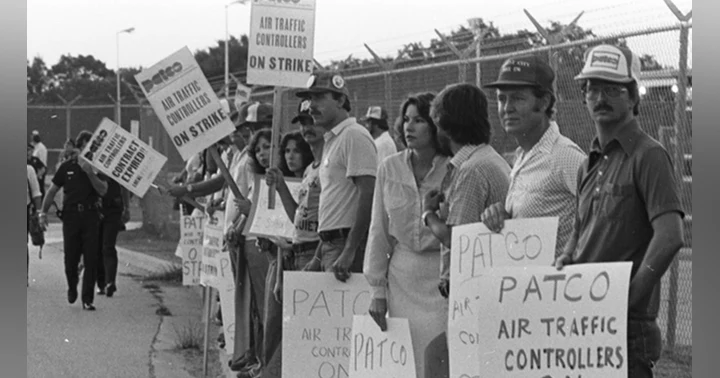
ATC: 45 Years After the PATCO Strike