If I Were an American Airlines Pilot
There’s no small amount of irony in the fact that American Airlines axed the contracts of their pilots just a few hours past Labor Day last month. Kind of adds insult to injury. I feel for the pilots having been around to watch the ugliness of Midway 1’s disintegration after failed Chapter 11 attempt in 1991. On the other hand, as the owner of a small business, I’ve also been an American Advantage customer for decades. It’s a tough spot actually.
 After the past few weeks of maintenance write up, pilots calling in sick and generally bad airline publicity, I was thinking about the point the pilots might be trying to make to the management people at DFW.
Certainly they were fed up with being asked to absorb more cuts. They were also saying there really still is a line in the sand, despite what the management people and customers on the outside might think. I don’t think this is going to be Eastern Airlines all over again where employees shut the company down for good, but I do think management everywhere might just have called the death of organized labor a bit early. There’s life in them yet … and that’s not all bad either.
I think I actually heard the pilots speaking for an entire industry of airline employees who, much like the American taxpayer, are simply fed up with taking it on the chin every time the economy coughs, hoping someone will do the right thing. Even the Democrats took a bit of a whipping a few weeks ago when Chicago teachers struck the district for a week and embarrassed Mayor Emanuel, Mr. Obama’s former Chief of Staff.
Of course working at an airline isn’t as much fun as it used to be. It’s not all about the money though. It’s also about respect. Here’s a fact. If you treat employees like dogs to be brushed aside when they get in the way of your plans, don’t be surprised when a few of those hounds turn around and bite you some times.
American’s former CEO Robert Crandall said something interesting recently about respect at American Airlines and I thought he too was talking to a much wider audience. “Every employee — from fleet service to chairman — deserves the respect of every other employee,” he told a pilot who wondered whether there was a future for anyone in this business. “Respect requires courtesy, and any employee, or any employee group that speaks ill of another renounces their own claim to either. And finally, respect implies a willingness to settle disputes within the context of the protocols of law and process that free societies from the grip of anarchy.”
Airline pilots tend to be conservative “red” people whom actually do find unionization an uncomfortable “blue” quandary at times. But they’re also pretty pragmatic, so when airline management see pilots and other employees as an annoying bunches of whiners, people who just don’t understand that the airline would run much better if they’d simply shut up and do their jobs, well … they just get riled up.
Pilots, just like flight attendants, mechanics, ramp and customer service people aren’t what’s getting in the way of success, well at least not all the time. They’re the reason airlines have customers at all. Airlines can run without management (OK, perhaps not as well), but try running one without mechanics to fix airplanes, or pilots to fly them, or cabin attendants to beat back some of the loonies who buy tickets these days.
The signal the AA pilots are sending is that they could shut the company down if they wanted to. So can the flight attendants, or the mechanics or the ramp workers. Folks can become kind of unpredictable when they’re cornered so be careful how far you push.
As Bob Crandall also said, everyone needs to start realizing what’s at stake and that individuals can make quite a difference to the solution. It works much the same way for some of those idiots we seem to keep reelecting to Congress hoping they’ll get it right the next time … both blue and red.
No one can have his or her way all the time. So now that the pilots have made their point, I hope they’ll be successful back at the negotiating table and realize that they need the management folks almost as much as management needs them.
At least this is what I’d be thinking if I were an American pilot.
Rob Mark, Publisher
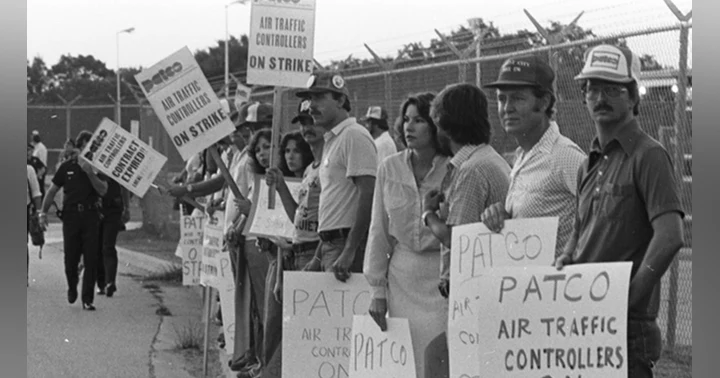
ATC: 45 Years After the PATCO Strike