No Pilot Left Behind
Talking recently with Michael Maya Charles, author of Artful Flying, our conversation turned a pilot’s passion for flight, for deft stick-and-rudder skills. Why, we wondered, does a pilot’s ardor wane from the student high as flight hours grow? While citing commercial and general aviation examples, Michael summarized the symptoms: pilots have the technology of aviation down, and they’ve obviously passed their checkrides, but their passion for stick-and-rudder precision leaves something to be desired, and “they are lost outside of the traffic pattern.”
In other words, when faced with a situation not previously tested, like landing in a quirky, gusting crosswind, their ability to adapt what they have learned to the unique situation comes up short. Thinking about this later, it struck me that a similar assessment describes the graduates of our public education system, and the cause suddenly became clear: standards-based education.
 In the classroom, these standards are embodied by No Child Left Behind; at the airport, they are itemized by the FAA Practical Test Standards. But these benchmarks of essential knowledge and skills are not the problem–it is how educational systems prepare students for evaluation. Because time and money are always in short supply, students learn how to pass the test, which means they never get beyond rote regurgitation of knowledge and skills that meet the requirements of predictable—and often practiced—challenges.
Since the 1990s, flight training has become increasingly self-contained: teachers and examiners are on the same faculty, and often they are graduates of the program they now run. So no matter where they are in their flying careers, they have always flown the same cross-country routes and simulated engine failures in a practice area where passable landing sites are well known. Without new challenges, rote knowledge and ability is good enough.
Aviation’s burgeoning technology contributes to the problem. Flying is an art and a science, and it’s easier to teach the science of programming today’s avionics than it is the art of stick and rudder. Let’s face it, the manual gives the best way to set up today’s computerized looking-glasses for each phase of flight. Landing in an epileptic crosswind requires skills sustained and nurtured through practice, the infinite combination of stick, rudder, and throttle inputs—and a predictive awareness of how the airplane is responding to them in the given conditions.
The solution to this situation is a remake of Catch-22. Student demand is the only thing that will change a school’s supply of training that provides the best test results for smallest investment of time and money. This is unlikely because as newcomers don’t know that they are on the path of least resistance to the land of complacency and good enough, you know, where "any landing you can walk away from…."
How many pilots do you know who, for example, routinely alternate their landings, short field, soft field, crosswind, power-on and off spot landings, and with different flap settings (as approved by the flight manual, naturally)? Not many, I’ll bet. Most take the runway closest into the wind and drive it on with power.
Being a pilot is all about responsibility, and that includes the passion for flight. Recapturing it takes work–and practice–and it can be fun if you recapture what Michael calls the "beginner’s mind." Challenge yourself and do something new: get a tailwheel endorsement or seaplane rating, alternate your landings and make an old school cross-county with a sectional chart, compass, and clock. Try it and you may rediscover that feeling of accomplishment last felt after your initial solo.
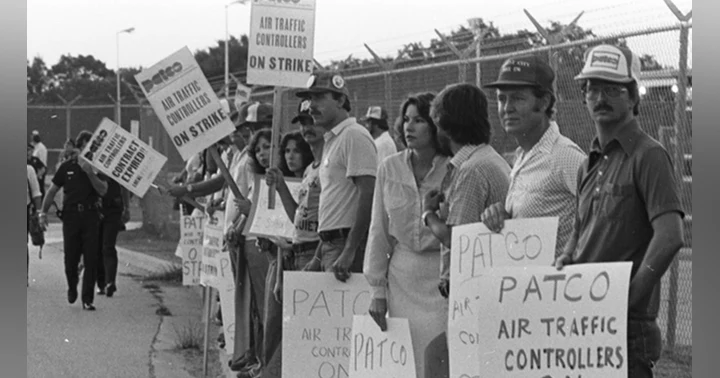
ATC: 45 Years After the PATCO Strike