Passengers Shouldn’t be Scared
 Should passengers ever be afraid on an airplane? Let me think on that a second. Ah … nope. I don’t think so.
I know it happens sometimes when people fly on small airplanes piloted by some dumb-fool hot-rod aviator. We all pay the price for that goofiness through awful accident statistics. But on an airliner or a business airplane flown by professional pilot? There should never be a fear factor.
I pay attention to how an airplane’s flying when I’m in the cabin. Maybe I know TOO much as a biz jet pilot — the sounds, the feel and all that. But I also know when I’m uncomfortable flying. And in 40 years, it hasn’t happened often.
Returning from France last month on an Iberia A340 through Madrid was one of those few times though. And it was more about being frightened – yup, scared – as we approached ORD than the fact that my seat for the 9-hour ride home felt like it was made of wood (which it did) or that the service was lousy (which it was).
As we began the approach to ORD, I had a great vantage point … a starboard window seat near the tail. We joined the runway 27 Left localizer line that seriously must have been 75 miles long since I could see the eastern shore of Lake Michigan through breaks in the clouds. As the flying pilot pulled the power back to join the queue, what really bothered me was how slowly they allowed the big Airbus to fly on final … clean. Fly it a little dirty and slow all you want, because adding flaps helps maintain a solid safety margin above stall speed. But that didn’t happen here. We just kept getting slower. With all the talk about airplanes falling out of the sky because crews didn’t understand the relationship between relative wind and critical angle of attack, this is just something I watch more now than I used to … not that I can do much from it the tail of the airplane of course.
Slowing any airplane with no leading or trailing edge devices means the nose of the bird gets pretty high. I was surprised as I listened to the engines speed up that they just seemed to want to make this slow approach with no flaps at all. “That’s interesting,” I thought. Like most of us, I put it off to a perception issue of miss queue from the back of the airplane because the nose was so high. Then, as I realized we had to be near the glideslope, I started getting nervous. Why are we flying a heavy airplane around slow and clean, I kept asking myself? I just didn’t like it. Finally, I heard the motors spin and watch the flaps begin to peel back from the trailing edge of the wing. About time. I was expecting a notch or so.
Then came the surprise. We went from zero flaps to probably 30 degrees all at the same time. The 340 started down the glideslope and never changed flap settings again to touchdown. That’s when I realized I’d been right.
The crew was flying around at a high angle of attack with no flaps for way too long. Zero flap to about 30-35 degrees in one fell swoop. My chief pilot would have whacked me longside the head for making such a major configuration change so quickly. Not simply because that would be admitting I hadn’t been paying attention in the first place and needed to add flaps to maintain a safe margin about stall, but because it makes for such an uncomfortable change to folks sitting in back.
Last time on Iberia for me … One World partner or not. And of course it’s after I return from France that some one tells me Iberia was named one of the 10 worst airlines around. On a 0-30 point scale, Iberia never even made it to 12 . Maybe they were just distracted by other things, like trying to launch their new airline, Iberia Express. Maybe they should fix the one they already have first.
Rob Mark, publisher
PS – And in case you think my review had anything to do with the fact that Iberia still refuses to credit me with miles flown on the leg to France, it didn’t … although that, alone would be enough to keep me off this airline a second time.
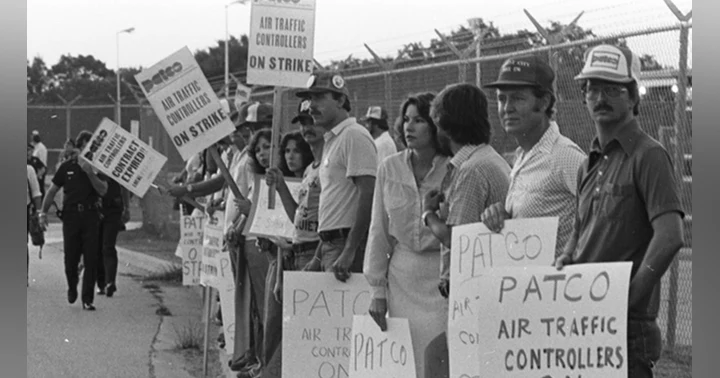
ATC: 45 Years After the PATCO Strike