Pilots & Their Professional Standing
A sure indication of age is the change in status of a profession once held in high regard. Embodied by the airline pilot, I’m talking about aviators who gets paid to transport people or cargo on a regular run. Once a respected and well-paid position, it is now approaching parity with the ubiquitous bus driver and over-the-road trucker.
 My point is to not cast aspersions on pilots of terrestrial transport; our lives and economy would suffer without their good work. It is more about the airborne profession transformed by its own success. Flying people and cargo has become so safe and reliable that it is no longer special. It is something that anyone can do with a training and practice.
What inspired this tangent of thought was an article in the Los Angeles Times, U of Ill. official says aviation program needs to be closed in cost-savings push. Closing the program would save the university $750K a year. According the U of I Institute of Aviation website, it has 300 students enrolled in its different programs. But that’s not what caught my eye.
The university’s interim chancellor initially said there might be a chance of replacing the Institute with a non-degree aviation program. But he changed his mind, because “there wasn’t enough demand to make that financially viable.” The key point here is the demise of college degrees, a leading status symbol for any profession.
This comes on the heels of the the possibility of GI Bill flight training, still fresh in my mind. If Congress appropriates the money, it will pay up to $10,000 a year for flight training under “non-degree educational programs.” That’s another way of saying vo-tech, which is where many commercial drivers learn their trade and earn their certification.
So, is a commercial pilot’s license (or airline transport pilot certificate) really any different than a commercial driver’s license? And what does the demise of aviation degree programs mean for the future of aviation? And how does it all trickle down to the industry and pilot population? — Scott
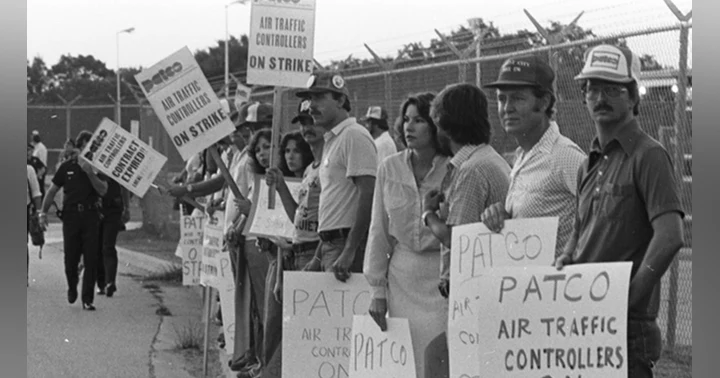
ATC: 45 Years After the PATCO Strike