The Air Traffic Controller Union: What is NATCA’s Value Today?
In case you missed it, the FAA Administrator gave a speech at the National Press Club last week to usher in the new age of “Since all the other countries in the world allow pilots over 60 to fly, we might as well too.”Blakey took questions from the audience and not surprisingly, she was hit with a few about Air Traffic Control issues.
Some were easy … “Tell us about the current negotiations between FAA and air traffic controllers.” Answer, “That contract is in place and it is time to move on,” Blakey responded. She sounded pretty certain about all of this to me.
Right now, pilots, flight attendants, mechanics and certainly air traffic controllers have been watching their professions erode to a mere shadow of what they’ve been used to as staffing numbers dwindle and pay takes a series of severe nosedives, while air traffic numbers continue to rise in the U.S.
No one would argue that even before the Bush White House opened for business, unions were taking it on the nose. Since 2001, it has obviously become much worse.
But we can’t blame every hole the aviation industry – and in this case the one NATCA, the air traffic controllers union – have fallen into over the past decade on the Feds, especially FAA.
The unions have done some of the dirty work themselves, although I doubt that was their intention.
Last year the FAA imposed a new contract on controllers after a battle that sent the bargaining agreement to Congress for action. No one thought Congress would lift a finger and they did not, so FAA imposed the document which was their right as things sit today. The new document – can’t call it an agreement since the controllers did not agree – called for a number of pay reductions while also asking for some pretty silly things, like a controller dress code where one has not existed for 30 years.
Give a listen to two interviews NATCA’s executive vice president Paul Rinaldi gave recently and tell me I’m wrong when I say that NATCA made a mistake axing the more militant John Carr for Rinaldi. The first was at AvWeb, the other on the Ed Schultz talk radio show.
If I were still a controller, I’d be worried … dearly worried by what I heard during these interviews, especially in light of the continued hammering NATCA is taking from FAA.
Both radio hosts asked the right questions. Especially on the Schultz show however, way too many of the answers Rinaldi offers are, “I don’t know what FAA is doing,” or “I didn’t know about that,” hardly leadership in any of its most basic forms. He told audiences the union wants Congress to help them obtain a “fair shot at collective bargaining.”
Sorry Paul, I think Congress spoke last year by saying nothing for the most part. Why do you think they’ll care now?
I spoke last week to a NATCA rep at a major U.S. airport and I asked point blank, “How do you plan to keep NATCA from simply evaporating and becoming totally redundant in the face of the FAA’s current tactics?” He had no answer either and said the guys at NATCA in DC were working on it.
“Hello!” Guys, the war is almost over and you’re forces are scattered all over the place.
If NATCA doesn’t get its tail moving pretty quick to show some teeth to the American public other than TV spots that talk to the importance of air traffic controllers, as well as figure out a better set of dance steps with FAA, they’ll be talking about this controller’s union in a similar vein to PATCO.
At least PATCO took a stand. Admittedly, they lost their jobs over it, but they drew a line in the sand and stuck to it.
While I’m not telling controllers to walk out, I am telling them that right now they’re paying dues to a really nice Washington social club from what it looks like here.
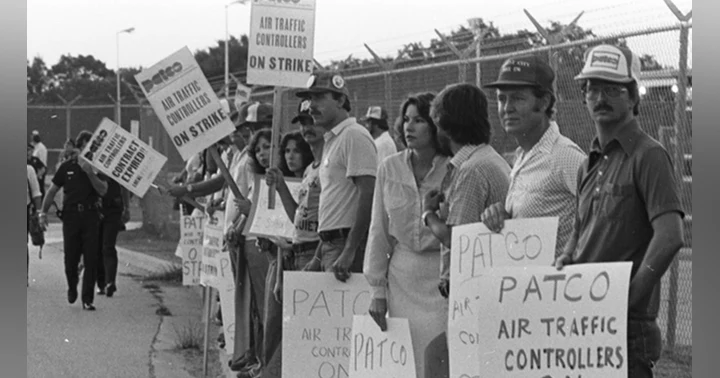
ATC: 45 Years After the PATCO Strike