The Mystery Deepens Around Air India 171
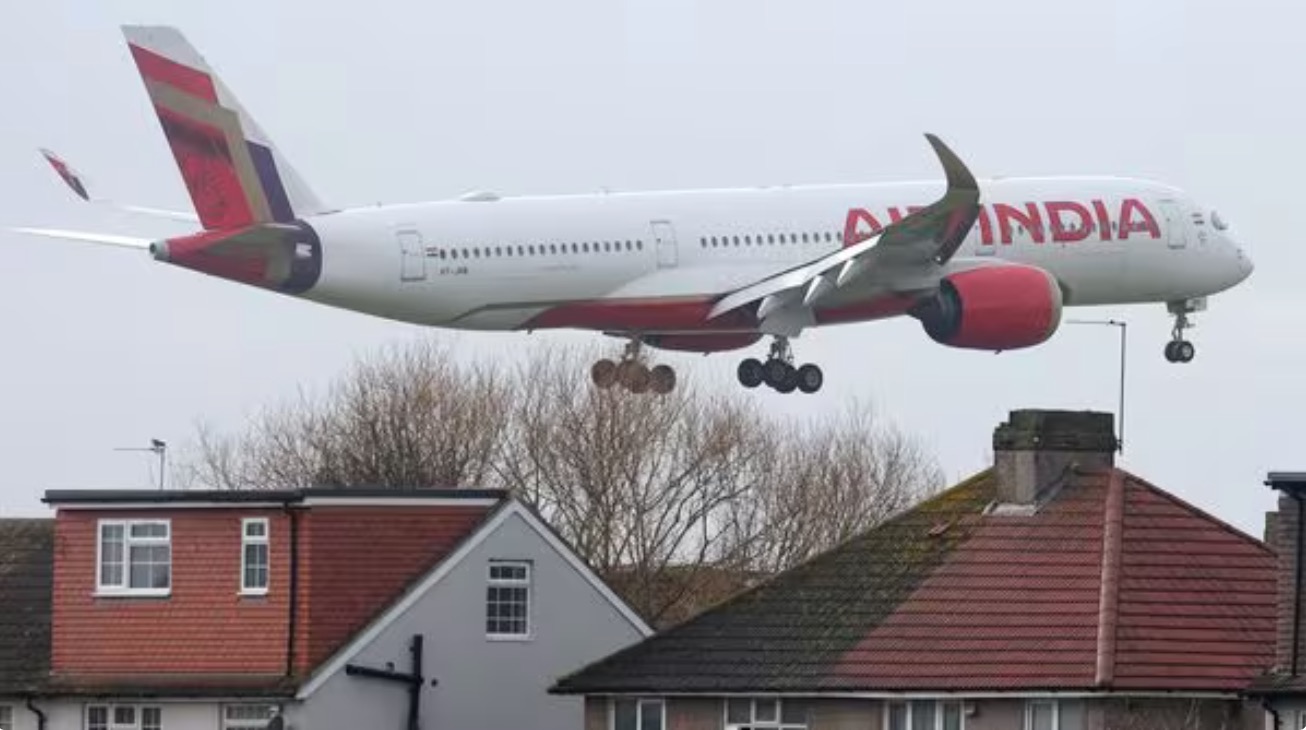
A single never-changing question follows every aircraft accident … “What happened?”
Most expected the recently published preliminary report by India’s Ministry of Civil Aviation, Aircraft Accident Investigation Bureau of last month’s Air India 787 8 crash at Ahmedabad would shed a bit of light on what brought down the Boeing.However, the 15-page report seems to have created more questions than it answered.

That’s because of a short piece of text on page 13 reads, “The aircraft achieved the maximum recorded airspeed of 180 Knots IAS at about 08:08:42 UTC, and immediately thereafter, the Engine 1 and Engine 2 fuel cutoff switches transitioned from RUN to CUTOFF position one after another with a time gap of 01 sec. The Engine N1 and N2 began to decrease from their take-off values as the fuel supply to the engines was cut off. When fuel control switches are moved from CUTOFF to RUN while the aircraft is inflight, each engines full authority dual engine control (FADEC) automatically manages a relight and thrust recovery sequence of ignition and fuel introduction. The EGT was observed to be rising for both engines indicating relight. Engine 1’s core deceleration stopped, reversed and started to progress to recovery. Engine 2 was able to relight but could not arrest core speed deceleration and re-introduced fuel repeatedly to increase core speed acceleration and recovery.
A few seconds later one of the pilots transmitted, “MAYDAY MAYDAY.
That made the primary question not what, but why.
Leading up to that paragraph, the report offered several indisputable facts.
The aircraft was found to be airworthy at takeoff. The weather was good VFR that afternoon, although the temp was 37C, nearly 100 degrees F. Ahmedabad sits nearly at sea level but density altitude that day would have been very high with aircraft performance reduced due to the high density altitude. Despite the post-crash fire that consumed much of the aircraft, the throttle quadrant showed details that will be critical to the investigation. In this photo, the fuel shutoffs are the black switches immediately beneath the two white throttle knobs. The fuel switches were found in the normal, or “Run” position during the investigation. Contrary to some earlier speculation, the flaps were found set for takeoff in the normal 5 degree detent. The thrust reversers – the smaller white knobs above the throttles were found in the normal, or stowed position.
The landing gear switch was set to the “Down and Locked” position emphasizing how quickly the engine issues appeared. During a normal takeoff, the non-flying pilot (NFP) will call “Positive Rate,” as soon as the aircraft is confirmed to be climbing. The normal response from the flying pilot is “Gear Up.”
The crew included the captain with more than 15,600 hours & nearly 8,600 on type while the first officer had logged 3400 hours of time with 1128 on the 787. Both pilots were well rested.
The Fuel Control Switches

Early on the preliminary report mentioned an interesting Boeing service bulletin related to the aircraft’s fuel switches. “The FAA issued Special Airworthiness Information Bulletin (SAIB) No. NM-18-33 on December 17, 2018, regarding the potential disengagement of the fuel control switch locking feature. This SAIB was issued based on reports from operators of Model 737 airplanes that the fuel control switches were installed with the locking feature disengaged. The airworthiness concern was not considered an unsafe condition that would warrant airworthiness directive (AD) by the FAA. The fuel control switch design, including the locking feature, is similar on various Boeing airplane models including part number 4TL837-3D which is fitted in B787-8 aircraft VT-ANB. As per the information from Air India, the suggested inspections were not carried out as the SAIB was advisory and not mandatory. The scrutiny of maintenance records revealed that the throttle control module was replaced on VT-ANB in 2019 and 2023. However, the reason for the replacement was not linked to the fuel control switch. There has been no defect reported pertaining to the fuel control switch since 2023 on VT-ANB.” The report then proceeded to discuss damage to the aircraft and buildings on the ground.
The Boeing’s CVR recorded conversation between the two pilots including one in which one asked the other why he’d cut off the fuel. The other pilot replied he didn’t do any such thing. CCTV footage obtained from the airport showed Ram Air Turbine (RAT) getting deployed during the initial climb immediately after lift-off. A Boeing 787 captain I interviewed explained the RAT doesn’t actually deploy because of a dual engine failure. He said the RAT deploys, “If three or more engine-driven generators fail.
There’s an implication the switches could be related to the accident, but nothing else was specifically mentioned, until the switches mysteriously moved to cutoff. A Boeing 787 captain I interviewed explained the cutoff switches are normally locked in place. To move either from “Run” to “Cutoff” requires one of the pilots to physically pull the switch out of the gate and lower it to “Cutoff,” a procedure he said would be nearly impossible to initiate accidentally. Also, consider the speed at which this action would have had to occur. Just as the nose of the aircraft is rising during rotation, one of the pilots would have needed to look down below the throttles and perform the above sequence, not once, but twice. If the reason for this action was suicidal as some pilots have claimed, then why quickly switch them back to run?
On Monday Reuters reported the FAA and Boeing have privately issued notifications that the fuel switch locks on Boeing planes are safe. When asked for comment, the FAA said it did not have anything to add beyond the notification.
To be clear, the information included in the preliminary report is not solely from the Indian Air Accident Investigation Bureau. The report’s creation was overseen by India’s Sanjay Kumar Singh, Investigator-in-Charge and, Mr. Jasbir Singh Larhga as Chief Investigator. Another team led by the NTSB Accredited Representative comprised of representatives from Boeing, GE and FAA participated in the investigation as well as officials from the Air Accidents Investigation Branch (AAIB), UK. Additionally, experienced pilots, engineers, Aviation Medicine Specialists, an Aviation Psychologist and Flight Recorder Specialists have been taken on board as Subject Matter Experts (SMEs) to assist the Investigation. All they had to work with were facts uncovered during their initial dissection of the Boeing’s remains.
The answers to these and other questions will be only be found in the final report on Air India 171 which is expected to demand 12-18 months to complete.
Rob Mark
ATC: 45 Years After the PATCO Strike