What Was AirVenture’s Most Interesting Airplane?
For about a month that follows EAA AirVenture, the most popular question posed by friends and acquaintances is What is the most interesting airplane you saw? This has always been the question since I attended my first Oshkosh convocation in 1978, and I’m sure it will continue until I can no longer perambulate the flight line.
 Answering the question is an exercise in subjectivity, so every individual’s answer is based on their aviation interests. Over the years I’ve developed a system, 3 Rs & U. To determine the most interesting airplanes, it has to be Rare, like the world’s only flying Douglas A-20 Havoc.
 Or it has to be Renowned, like the B-52, which made its second trip to Oshkosh this year. And it can be Resurrected, which put the renowned D-Day leading C-47 That’s All Brother, which Basler Turbo Conversions is now restoring for the CAF, ahead of two homebuilt designs from the 1970s.

But surpassing all of these is any older aircraft that was previously Unknown to me after a lifetime consumption of everything aviation. That makes the Boeing YL-15G Scout the most interesting airplane of AirVenture 2017.

It is because of aviation surprises such as this that I really do love the Internet. Hoping to expand its product line down from big bombers, Boeing built 12 L-15 Scouts in the closing days of World War II as STOL liaison and observation aircraft. With no post-war interest from the military, which was selling its leftover airplanes for pennies a pound, Boeing presciently decided not to offer the L-15, powered by at 125-hp Lycoming, to the civilian general aviation market.
 After the US Army finished with them, the L-15s went to the US Fish & Wildlife Service in Alaska. It was a perfect fit, because the observer could rotate his or her back seat 180 degrees for a panoramic view through the design’s unique Plexiglas clamshell doors. Oh, and the airplane was also flown on skis and floats, making it perfect for Alaska. (And it could be “folded up” and towed by a jeep.)
Of the dozen built, one remains airworthy. It’s been owned by the Brunquist family since the 196os. Keith Brunquist spent several years restoring the airplane and then he shared his magnificent work with the world at AirVenture 2017, making it a special year for me. — Scott Spangler, Editor
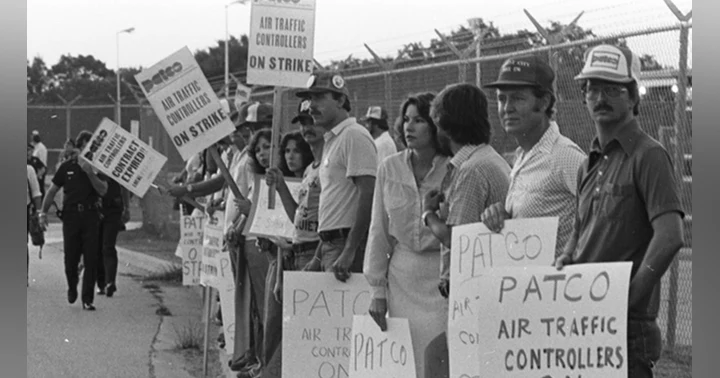
ATC: 45 Years After the PATCO Strike