With Air Show ATC Fees, the FAA is Following the Airlines’ Lead
 Searching for a scintilla of logic behind the FAA’s ATC fees for the air traffic control services it provides at fly-ins, I realized that the roughly $500,000 bill it sent EAA AirVenture Oshkosh was, in effect, an airline baggage fee. From either source, forget all their trumpeted rationalizations. That nonsense drowned in the fetid swamp of cynicism government and big business long ago created as they redeveloped society so that it met their needs at the expense of their customers.
In other words, they did it because they could.
Government has been trying to recreate an airline business model of charging fees for everything, and sequestration gave them the “authorization” to do it. What’s really ironic is that airline fees, which are not taxed like tickets or fuel, contribute no revenue to the aviation infrastructure, airports, capital improvements, and FAA operations including ATC. Yup, airline fees are a parasite, and to make up for the financial nutrition it sucks from the system, FAA is starting with ATC fees.
According to the Washington Post, since they started the practice, the airlines have collected $12.8 billion in fees for something that was once free. In 2012 they collected $924 million—that’s right, nearly a billion dollars—in baggage fees, a 3 percent increase over the same period in 2011. Oh, and baggage fees are not taxed like airline tickets. With the aviation fuel tax, this ticket revenue pays for the American aviation infrastructure, at least until FAA fees on all the services it provides takes over.
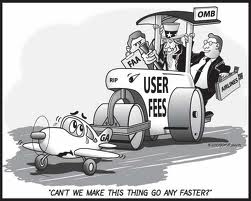 The days when Congress could counteract such fees are waning. With its members, in both parties, behaving like self-absorbed only children, the current Congress is on pace to do less than the one that preceded it. Besides, its members are beholding not to voters but to the big businesses that fund their reelection campaigns. And we get exactly what we deserve because we keep reelecting them.
Some have suggested that incorporating or privatizing ATC might be a way to overcome the inevitable arrival of more fees. That might work in some place like Canada that, according to the Daily Show, effectively regulates its banking industry. As an old-school, professionally trained journalist, words cannot describe the convoluted emotions that come with the realization that the broadcast news source I trust most to tell both sides of the story (so I can make up my own mind rather than being told how to think) is a comedy show that fuels its satire with objectivity.
Come to think of it, I remember reading about people’s concerns when NavCanada moved to the private sector, but honestly in reporting other stories about different companies that work within this system, I haven’t heard of any big problems. But that doesn’t mean it will work here. If you want to know where private sector ATC will go in America, look at the other attempts at solving similar funding problems, Amtrak and the U.S. Postal Service. For the reason behind their poor performance, look to a micromanaging Congress.
The really bad news is that there is no quick and easy solution to this problem, and as a nation and an industry, we’re addicted to anything quick and easy, like the bottom line numbers that come with fees on things we once provided as part of serving our customers. — Scott Spangler, Editor
ATC: 45 Years After the PATCO Strike