2010 Updates Pilot Population Highs & Lows
Using FAA data provided by the General Aviation Manufacturers Association’s annual Statistical Databook, I’ve built a spreadsheet of pilot population data back to 1964. Updating it for 2010 revealed a new highpoint in pilot certification: 96,473 active flight instructor certificates.
 The number of CFIs has been trending consistently upward since its 1968 nadir of 30,361. Their numbers grew by 1,610 between 2009 and 2010. What’s really interesting, however, is that in 2009, instructors outnumbered active student certificates by 22,583.
The FAA issued just 72,280 student certificates in 2009, the lowest number since 1964. Despite the economy, student numbers rebounded remarkably (46,839 is a good bounce) in 2010, topping out at 119,119, which led to an overall increase in the pilot population.
In 2010, the number of active private pilots shrunk by 9,599, to 202,020. Given all the reasons for letting a certificate go inactive, there’s no accurate formula for predicting how student numbers affect sport, recreational, and private pilot figures. But the past offers some hints.
In 1964 there were 431,041 active pilots, with 127,743 student and 175,574 private tickets. Student certificates peaked in 1979 at 210,180. As a result, 1980 is the highpoint for private pilots—357,479—and total pilot population, 827, 071.
Like an accelerated stall, the numbers plummeted in 1981. In rough thousands, student numbers dropped 20K to 179,912, privates fell 29K to 328,562, and commercials tumbled 15K to 168,580 for a net reduction of 62,889 active pilots. If memory serves, there was a recession then, too.
Running my spreadsheet’s row for total pilots from 1964 to 2010, aside from a few spikes falling short of 20K, the total pilot population rarely fluctuates more than 10,000, give or take a few Ks. In 2010, the total increased 33,303, a significant addition to 2009’s 594,285.
This increase might be reason for hope, but we won’t know that until next year. Now, the increase continues what looks like PIO, pilot-induced oscillations. In round numbers, the trend was in steady decline to 2007’s 590K. In 2008 it pitched up 23K to 613K, dropped 19K to 594K in 2009, and zoomed to 627K in 2010.
 While waiting for next year’s numbers to suggest a growth trend or a continuation of population PIO, there are signs of hope—and a conundrum. Since its birth in 2005, the sport pilot certificate has grown steadily to 3,682 in 2010. (At the spectrum’s other end, ATPs peaked in 2008 at 146,838, followed by annual 2K declines.)
Unfortunately, the sport pilot number only counts certificates issued. There is no way to count how many private pilots have replaced their medical certificate, on which active pilot numbers are based, with a driver’s license when they started exercising sport pilot privileges.
Private pilots are still the majority among active aviators; roughly half of them are boomers 50 to 69 years old. Based on primary use data, most of them fly for personal/recreation. Without some way to account for their transition to sport pilot, we may be in a situation where the census of active pilots is shrinking while their actual numbers are growing. — Scott Spangler
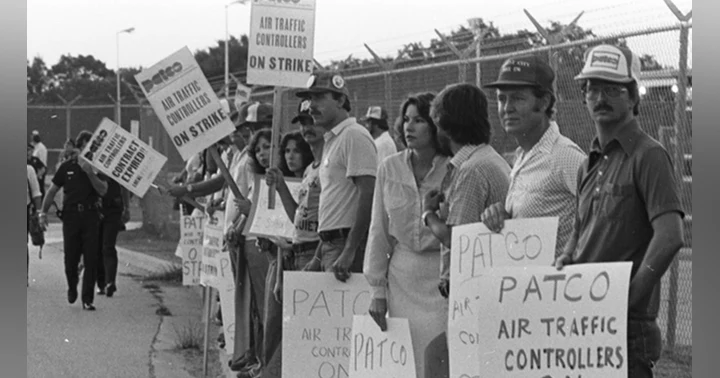
ATC: 45 Years After the PATCO Strike