Air Traffic Control: Over-Controlling
 The service delivered by some ATC facilities today is just not what it used to be in the old days before the PATCO strike. There, I said it.
Having been around in the old days — like the 70s – when traffic at most towers was insane by today’s standards, I think I have some solid data to measure against.
When I say service is not today what it used to be though, I don’t mean at the nation’s busy facilities. There’s no way controllers at JFK, ORD, ATL or LAX could push out as many airplanes per hour as they do unless they were operating with plenty of adrenalin in their system. Think shoot the gap, which translates into never wasting 60 seconds of airspace when you can put an airplane into it. Those kinds of results come from superb mentors teaching recruits how it’s done.
My focus here is on the less busy VFR towers, specifically the ones in the Chicago area where I still fly some 200 hours each year, airports like Chicago Executive (KPWK), Waukegan (KUGN), Kenosha (KENW) and DuPage (KDPA). Kenosha and Waukegan are contract towers run by a private company where the controllers are not NATCA members.
My gripe is that no one seems to be training these controllers how to move traffic … quickly. Sure being safe is important to the best ATC system in the world, but VFR towers should be delivering efficiency too.
Having spent 10 years of my life as an FAA controller myself, I have very little patience when I sitting in an airplane holding short of the runway for takeoff, long after the landing aircraft has cleared the runway. I watched a Waukegan controller the other day clear a training aircraft for an “Immediate” takeoff when the nearest airplane was on a six mile final approach. There’s simply no reason for a controller to wait so long to clear the next airplane for takeoff in the first case, nor to rush a student like in the second.
On a four-mile VFR final in the Cirrus SR-22, the tower controller broke us out with a 360 degree turn for a Corvallis on a three-mile right base because he thought the Cessna was faster. And he was, but so what?
Why is it that no one taught this controller the differences between these airplanes, nor the obvious speed similarities? Or why did no one seem to teach this controller that a right base can’t beat a straight in. What happened to telling the guy on the base leg to follow the straight in and slow the heck down?
At Kenosha the other day, we were asked to run our patterns on the short runway 25 Left while the tower controller ran two helicopters on the longer right runway. Sure we needed the practice on the 3,300 foot runway, but it is simply beyond me why the controller told us there “would be little chance in the for seeable future,” of getting on the longer runway because of the helicopters. Why didn’t this controller understand that helicopters don’t need to run circuits on a 5,500 foot runway?
Before anyone assumes I’m simply grabbing at random events, I’ll tell you that this topic’s been brewing in my head for years actually. I doubt seriously that mine are isolated observations though. What irritates me about this lack of training is that all too many of my fellow pilots simply turn the other cheek and put up with it assuming this is as good as it gets. I think users have a right to expect service just as good at the smaller airports as they receive at the busier ones. I also think it makes the good controllers look bad.
I know full well that VFR towers are training facilities and that FAA is training right now at a feverish pace to replace folks who came in after the strike. But when it takes longer to get airborne at an airport when it runs 125,000 operations per year than it did when that same airport ran twice as much traffic, something’s wrong with the training program. How about someone mentioning that rattling off the ATIS at Warp-speed makes them incomprehensible to many pilots.
I wish I could say this less-flexible level of service only occurs at non-NATCA towers, but Chicago DuPage and Executive are FAA run towers.
I’ll listen. Tell me why users should be willing to accept slow service because controllers seem to have had less than demanding training programs at a VFR airport, especially when I’m sitting on the sidelines burning gas that now runs $7 a gallon at KPWK.
Rob Mark, editor
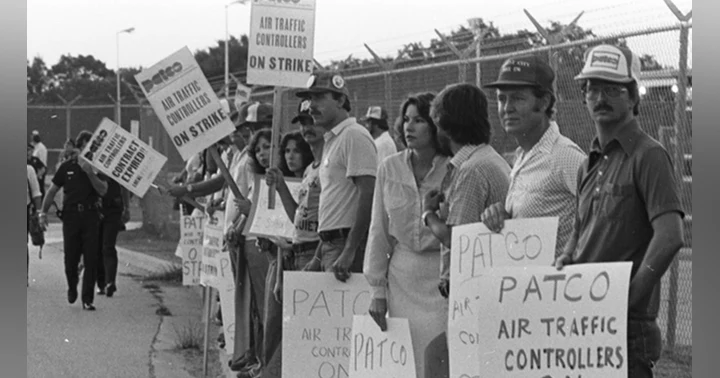
ATC: 45 Years After the PATCO Strike