AirVenture 2011: Memorable Waypoints
Sitting on the front porch with my battered feet bared to a healing breeze, I celebrated the end of my 34th EAA AirVenture Oshkosh marathon. Delivering my second round of rehydration elixir, my wife joined me. Having made the trek herself, she knows that the seemingly countless waypoints of things to see and learn are overwhelming, and that each year is defined by those things that survive in memory on the day after it’s over.
 First thing Monday morning I eagerly found a seat close to the stage at the FAA Safety Center for an update on the Next Generation Air Transportation system. In its place was a member of the FAA Safety Team from the Great Lakes Region talking about ATC communications. The FAA exhibit area was almost a ghost town. In most of the booths usually staffed by FAAers in that division was an empty chair and a laminated explanation:
Congressional authorization for several FAA programs expired at 12:01 a.m. on July 23. As a result, nearly 4,000 FAA employers are now furloughed without pay. Given these circumstances, we are restricting our participation at AirVenture this year.
The Administration is working with Congress to resolve this unfortunate situation, and we regret the hardship this situation may cause for our employees and our stakeholders, including the attendees at AirVenture.
We wish you a successful event and hope to see you next year under getter circumstances.
Hoping that this was not an omen of what I would find elsewhere on my AirVenture hike, I trudged north. Each successive waypoint restored my hope and interest in aviation’s future, and these are the standouts.
 At the back of the Honda chalet was a huge shiny metal panel obviously shaped by a CNC mill. Covering its slightly concave surface was a grid of stiffeners. It was, a company rep said, the top skin of the the HondaJet’s natural laminar flow (NLF) wing, cut from a 2,500-pound block of aluminum alloy. With the ribs essentially built in, the upper and lower skins bolt onto the spars, he continued, substantially reducing the parts count. Given the milled skin’s smoothness and rigidity, it delivers a high maximum lift coefficient, low profile drag, and reduced performance penalties due to leading edge bug contamination, a problem with conventional NLF airfoils.
 A German FW-190 stood out out among the Navy’s World War II vets, celebrating the centennial of naval aviation, in the Warbirds area. My first encounter with the storied warrior, I inspected it closely. The Pratt & Whitney radial offered some confusion, until I learned that this airplane, part of the Frasca stable of warbirds, was a full-scale kit replica of the original, with pragmatic improvements. The most memorable detail were the autographs on the tail, all of whom who faced the Focke-Wulf in combat: Bob Hoover and Al Rigby of the the 352nd Fighter Group, C.E. “Bud” Anderson of the 357th fighter Group, and Wilbur Richardson, a B-17 ball turret gunner in the 94th Bomb Group.

In the grass behind the FW-190 were four bright yellow airplanes—a Fleet Finch, a Stearman, a Fleet Cornell, and a Harvard—each emblazoned with British roundels. They belonged to Vintage Wings of Canada, which was celebrating the 70th anniversary of the British Commonwealth Air Training Plan with a cross-Canada tour that included a stop at Oshkosh. Between 1939 and 1945 BCATP trained more than 200,000 British Commonwealth pilots, an effort that led President Franklin Roosevelt to call Canada the “Aerodrome of Democracy.” The aircraft of Vintage Wings fly in tribute to their past pilots, whose names are prominent on their fuselages. The Harvard honors one of its students, John Gillespie Magee, the poet who the immortal High Flight.
 Outside the southeast exhibit hangar I found two side-by-side Pipistrel gliders joined by a wing that held a powerplant in a nacelle with no air intake. Overall, it’s carbon fiber and Kevlar wings 75 feet. Pipistrel calls the four-seater the Tarus G4, and in September it will complete in the 2011 CAFE Green Flight Challenge. Oh, there’s no air intake because the 200-hp, liquid-cooled motor runs on electricity. And it has four seats because that gives it a points advantage in the competition, with Pipistrel has won the past two years. With a gross weight of 3,600 pounds, it has a useful load of nearly 2,000 pounds. Flight testing starts after AirVenture, which will derive the batteries endurance.
 An expert rolling cigars is not something found at an aviation event, but there he was, Luis Rodriguez, unlit cigar in his mouth, hand-crafting aged tobacco into succulent stogies at the booth promoting the Dominican Republic to aviators. I wasn’t the only one so attracted. Tourism is the primary draw, said a rep, but there are jobs and other aviation opportunities on the island nation that shares a border with Haiti. It is 667 nautical miles direct from Fort Lauderdale, he said, but most GA pilots stop at Exuma International for fuel, which divides the flight into legs of 282 nm and 386 nm. Lucky to get a sample of his work, I saved my freshly rolled cigar for my front porch celebration.
 Ultralights, at the south end of the AirVenture grounds, was the farthest waypoint of my weeklong marathon. There was a lot of open exhibit space this year, but not as much as last year. And there was a new airplane, Valley Engineering’s Backyard Flyer, a Part 103-legal ultralight, on tricycle gear. Aside from the robust nose wheel, it’s the same swing-wing airplane I tried on three years ago. Regardless where the third wheel resides, the price is the same, $19,500 ready to fly, because building either version costs the same, said Elana. They built this one two weeks ago, and the paint barely had time to dry before Oshkosh.
So tell me, if you made it to Oshkosh this year, what are your memorable waypoints? — Scott Spangler
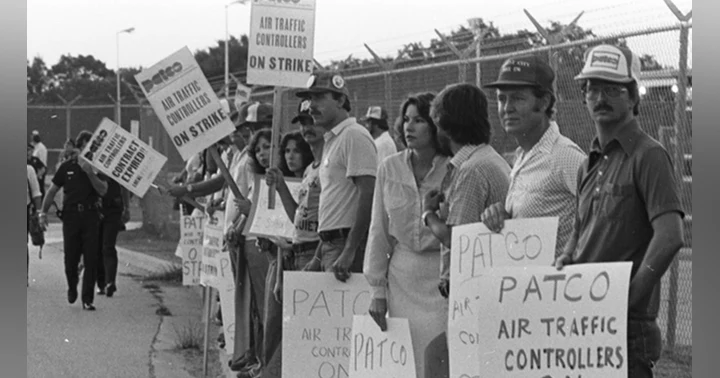
ATC: 45 Years After the PATCO Strike