AOPA FTSRI Offers Hope for GA’s Future
Given its more than half century of tradition unimpeded by progress, I’ve always been cynical about the future of general aviation and its life’s blood, the flight training industry that educates new pilots. Then I attended the next-to-last regional meeting of the AOPA Flight Training Student Retention Initiative (FTSRI), held August 23 at the Hilton Garden Inn across the street from the Chicago-DuPage Airport. It offset my cynicism to the point where I think they have a 50-50 chance of making a difference.
 The 2.5-hour meeting got off to a good start. About 50 people registered for the gathering, and 40 of them showed up. Disbursed at 10 tables, before the break I sat with three student pilots and a new private pilot. During the break, Jennifer Storm, who leads FTSRI, asked if I would relocate to even out a table occupied by a CFI, a student pilot, and a new private. Another gathering, which I did not attend, would be held the next day for CFIs and flight school operators, she said.
Both regional meetings operated with the same rules: Focus on what we can do, not what’s wrong. Yeah, I’ve heard that before, but the well structured and led program pulled it off! Before a break at the hour mark, Storm PowerPointed AOPA’s research findings (see The Flight Training Experience: A survey of students, pilots, and instructors). Afterwards, each table would achieve consensus on a pertinent retention attribute and propose a workable solution. With each shared solution, and news of AOPA efforts in beta test, a dory of hope started to float on my ocean of cynicism.
 AOPA’s qualitative and quantitative research distilled 11 first-order factors from 47 attributes that describe the optimal flight training experience. The 11 factors were subdivided into four groups, Educational Quality, Customer Focus, Community, and Information Sharing. From these each table agreed on what it saw as the preeminent factor/attribute in five areas—Education Quality: Instructor Support, Test Prep, Additional Resources & Instructor Effectiveness, Organized Lessons; Customer Focus; Community; and Information Sharing.
A member of each group recorded the consensus attribute and solution on a form collected afterwards, and a staffer took notes of the whole-group discussions about the shared solutions. Storm also asked pointed questions about ways AOPA or others better suited could put the solution into practice in ways both affordable and far reaching, often through an online component. In an informative interlude, Storm said all of AOPA’s flight training student retention information was in the process of being concentrated on AOPA’s Flight Training website.
By the AOPA Aviation Summit, September 22-24 in Hartford, Connecticut, the beta My Flight Training should be up, said Storm. Beyond connecting students to the community of aviators, it may well provide data to help increase retention before and after initial training. In customizing their page, students will input the dates and comments on such milestones as intro flights, initial solo, solo cross-county, and night flights. Along with it is the free Pilot in Command t-shirt. On its tail is a dotted line for its removal after the wearer’s initial solo.
This shirt is an essential component of AOPA’s effort because it resurrects one critical aviation tradition that seems to have gone by the wayside. Flying has been—and always will be—expensive, but people, as those in attendance proved, will pay the price if they find value in flying. Being shorn of a shirttail after successfully completing one of life’s more exacting challenges—initial solo flight—is the priceless ceremony that welcomes students into the ranks of pilots.
AOPA will hold one more regional FTSRI meeting in Dallas, and it will hold another Flight Training Symposium at its Aviation Summit. With this productive effort, which includes the rebirth of Flight School Business, a digital newsletter that serves their business needs, GA probably had a 50-50 chance for a future. What will make the difference is everyone’s participation. AOPA can’t do it alone. Remember the old saw about leading a horse to water. What will make the difference is all of our individual efforts. — Scott Spangler
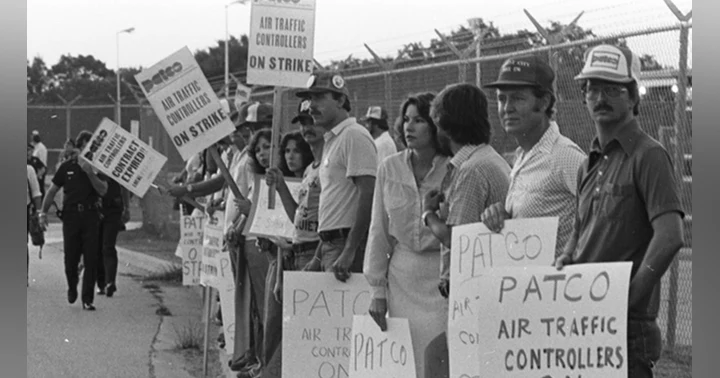
ATC: 45 Years After the PATCO Strike