Aviation Has the CFIs it Deserves
Called with the dawn of Veteran’s Day to substitute for a middle school special education teacher, I missed the online AOPA Aviation Summit presentation that conveyed the results of its survey of flight training dropouts. I haven’t found the archived video, but I did find a couple of releases that provided some the the information I’ve been waiting for.
 Many in the industry, it seems, were surprised that the cost of flying, while a factor, isn’t the primary reason 80 percent of students quit before receiving their certificates. According to AOPA Convenes Major Flight Training Summit, students quit because of poor educational quality, poor customer focus, poor community, and poor information sharing.
In the AOPA Online Newsroom, AOPA Convenes Flight Training Summit provides more specifics. The research’s 47 statistically valid attributes fell into “11 discrete factors that affect the student pilot experience. Five of the 11 are directly related to educational quality with respect to both individual instructor effectiveness and flight school support for and management of instructors: effective instruction; organized lessons; flight school policies that support and maximize instructor effectiveness; providing additional resources; and test preparation.”
In other words, it’s the teacher’s fault, just as it is in public schools when students don’t meet expectations set by politicians and other experts. This should not surprise anyone on either side of the airport fence because in the pantheon of professions, Americans behold teachers with stratospheric disregard. Unappreciated with over work, low pay, and responsibility without support or authority, we have the teachers we deserve.
AOPA’s survey results will add new nuances to the decades-long flight training talkfest, and I’m sure they will be dissected at the GA Pilot Training Reform Symposium, to be held in Atlanta this coming May. All the stakeholders will nod knowingly and sagely predict that implementing changes they propose will make training better so students will see their training through to certification. There are sure to be charts and graphs and well defined best practices that will result in a perfect world.
But until we make teaching a profession worth doing, and one done well, all this work is certainly doomed to fail. And I’m sure that the requirement that first officers have 1500-hours before hauling passengers will surely speed this change because airline hopefuls will now see flight instruction as a viable career option. (Read with the sarcasm needle pegged in the red.)
As most teachers will tell you, achieving the desired results is simple, but not easy. One must accept that the primary learning team is a student and a teacher. (For me, a teacher is a student of a particular subject who shares what he’s learned about it with others.) Whether they meet in a classroom or cockpit, both must be on time and be prepared to teach and to learn.
But sharing knowledge requires effort, and teachers and students are not immune to laziness. A teacher who doesn’t organize and prepare for an upcoming lesson makes the same contribution to failure as a student who doesn’t do his homework.
This is where the secondary learning team, parents and school administrators, plays a crucial role. Administrators must hold teachers responsible for being prepared and—equally important—they must stand by teachers who reward students for the work they did or did not do.
Parents must ensure that students are ready to learn and support teachers and administrators in the consequences their children earn. When the student is an adult, teachers and administrators must agree on—and stick to—motivating consequences for being unprepared. One solution might be to spend the hour on the ground, doing the assigned homework, instead of flying. For repeat offenders, maybe the teacher should charge a motivating “no homework” rate.
Like I said, it’s a simple solution that is almost impossible to execute because it demands the individual effort and long-term commitment of students, teachers, and schools. Actually, it might work in aviation before it works in schools on the other side of the airport fence because flight schools don’t have to worry about the agendas of parent-teacher organizations, unions, politicians, taxpayers, and special-interest groups.
But aviation does have a century of tradition unimpeded by progress. If you’re not sure what that tradition is, just ask any flight instructor trying to make living by teaching alone. — Scott Spangler
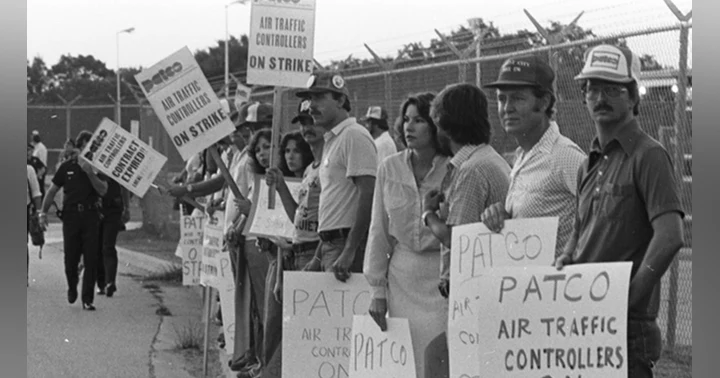
ATC: 45 Years After the PATCO Strike