Becoming a Pilot: Is it a Relevant Choice?
Is it karma that led NPR to broadcast a story on the dwindling number of student pilots in June? It reported an FAA estimate that this year’s number of student pilot certificates would total less than 60,000, a “10 year low.” If you remember, June 1989 was the inauguration of the annual National Learn to Fly Month, and that year the FAA issued 142,554 student certificates.
 The FAA only posts 10 years of airman numbers, but GAMA’s Statistical Databook archive provides FAA numbers back to 1964, and less than 60,000 student certificates is not just a decade low but an all-time low. Student certificates peaked at 209,406 in 1968 and reached an all-time high of 210,180 in 1979. They have been in decline since then, falling into five figures in 1994.
These numbers are student certificates issued. No one really knows how many students eventually earned a pilot certificate. And no one really knows how many quit before they got their student certificate, typically just before solo. (See General Aviation Won’t Find Future Pilots in Rear View Mirror.) An anecdotal presolo dropout guesstimation is 50 to 80 percent, so adding that to the number of certificates issued means somewhere between 315,270 and 378,324 people started flying lessons in 1979.
A question more pressing than the accurate number of those who dropped out or completed training or is why are increasingly fewer Americans signing up for training? Looking at the primary factors involved, from training to recreational and career possibilities, the answer seems clear: becoming a pilot is no longer relevant to people today, especially to those who will become the next generation of professional pilots.
A substitute teacher for the local middle and high school, my students, after learning I’m a pilot, express genuine interest by asking a lot of questions about possible aerial adventures, usually fueled by low-level video game yanking and banking and Red Bull Air Racing. Their interest quickly wanes upon learning how much time, money, and work it takes to become a pilot. This predictable because they, and their parents, grew up and live in a consumer-driven world based on immediate gratification.
Still, tens of thousands step up to the challenge, and a few actually become pilots. (See A Rare Breed: Students Who Finish Training.) But imagine the outcry if public schools had flight training’s dropout rate. The flight training industry’s typical response is little more than blaming the cost and lack of student determination. Certainly, both are factors, but a more important factor is one that also affects public schools: boredom.
Like public school curricula designed to meet the requirements of No Child Left Behind, flight training rarely goes beyond rote to teach the test. (See No Pilot Left Behind.) Exacerbating this problem is aviation’s perpetuation of a system of pilot training and experience building that has changed little since the end of World War II.
 The CFI and aspiring professional pilot in the NPR report explained it perfectly: His loans total nearly $100,000, and to build the experience that will qualify him for a $20,000-a-year right seat in a regional airliner, he’s forced to “flight instruct, tow banners, and haul skydivers.” Think about the attitude bred by this decades-old system and the declining student and pilot population should surprise no one. Students expect a teacher, but what they often get is a disinterested safety pilot who regurgitates the rote education he memorized from a CFI just like him.
Following tradition, the NPR story reported that the low student numbers would lead to a shortage of professional pilots. Really? Has a flight ever been cancelled because there was no one to sit up front? It is true that airlines have lowered their entry-level flight-time requirements, and following tradition, NPR reported that this reduces safety.
Nonsense. Flight time is a lousy measure of a pilot’s capabilities. Training is what makes the difference. Just ask the US Navy. Its aviators enter the fleet with roughly the same flight time as new commercial pilots, 250 hours. The low-time aviators are landing F-18s on a pitching carrier deck at night, and new commercial pilots worry about how often they will have to fly a lazy eight during their careers.
Maybe, must maybe, a shortage of professional pilots will really happen this time. People are pretty smart, especially when their heroes are not the descendants of Lindbergh and Earhart but the wizards of technology and business who exemplify the benefits of smart decisions that bring a good return on the investment of their intelligence, time, and effort. (See Who Will Fly for America Tomorrow?)
Historically, aviation only makes changes when it is forced to; the federal aviation regulations are proof of that. So only a true shortage of professional pilots will force aviation to abandon its 60-year-old model of training and professional development. Maybe.
 A good solution might be the military model, where candidates vie for a coveted seat, knowing they will receive top-notch proficiency-based training designed for the mission they will soon fulfill. Anyone can apply, but only the best will be chosen for the education program that fills a guaranteed professional pilot slot. Because the airlines would have more invested in their pilots, perhaps they wouldn’t treat them like Doritos: Hard financial times? Furlough them! There will always be new suckers who still believe in the happy airline pilot dream.
Collegiate aviation programs might be an excellent professional pilot training partner. Aside from having the necessary human and knowledge resources, equipment, and facilities, it would be easier to ensure consistent screening, curricula, and assessment of proficiency through the system of accreditation they all now comply with.
Such a model would take private flight schools and instructors out of the mix of professional pilot training, but such is the price of progress. This happens to all fields, just ask anyone in publishing what the Internet has done to the print side of the business. But progress forces us to change, adapt, and adopt new ways, and flight schools can do the same.
First, flight schools must accept that they are in the education business, not the aviation business. (See California Requires Pro Training Standards That Don’t Involve Stick & Rudder Education and Pay Attention to California School Regs.) To survive and prosper they should develop mission-based education programs for those who need personal all-weather transportation in technically-advanced airplanes or want to fly purely for sport—for the fun of it. And hire teachers, not safety pilots.
Then, flight schools and instructors must actively recruit students from their community, not sit around and wait for some national effort, like the long forgotten National Learn to Fly Month, to send prospects through their doors.
Finally, schools and instructors must address aviation’s horrendous dropout rate. Because becoming a pilot is no longer relevant to most Americans, each new student pilot is a rare resource that must be treated with respect. — Scott Spangler
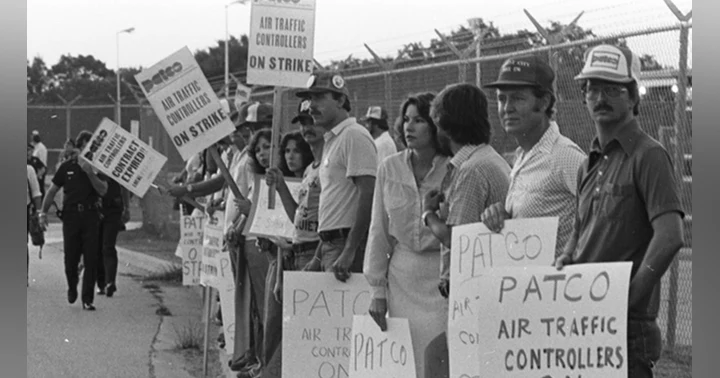
ATC: 45 Years After the PATCO Strike