Commercial Drones Facing Pilot Shortage
 To learn more about commercial drone operations, I recently attended a 4-hour introductory course for pilots conducted by Vortex UAS. The thorough presentation covered everything from history to the current legal landscape. What I did not expect was to learn that commercial drones are facing a growing pilot shortage because they must be operated by an FAA certificated pilot.
Vortex UAS President Vince Donohue made it clear that there is no FAA certificate for drone operators (right now). But to receive a certificate of authorization for commercial operations under Section 333 FAA Modernization & Reform Act of 2012, commercial drones must be operated by an individual holding a private pilot certificate and current third-class medical. Explaining this opportunity to pilots is what led to Vortex’s introductory course.
The act did not explain the requirement for a certificated pilot, but there are two logical assumptions. First, certificated pilots have demonstrated their knowledge of aviation and airspace regulations, and they have some experience operating in the National Airspace System. Second, with a certificate involved, the FAA can enforce violations of those regs.
This led one of the participants, who holds an airline transport pilot certificate to ask if an action from a drone operation might affect his day job, guesses are all Donohue and the participants had to go on. And given the reality that a certificate action is a certificate action no matter what the pilot is flying, the answer is probably yes. An ATP himself, Donohue recommended that professional pilots assess the risks before flying drones.

At a recent AUVSI event, the shortage of FAA-certificated pilots to operate commercial drones was a frequent topic, Donohue said. Evidence supporting this shortage, and the booming number of companies applying for Section 333 exemptions (including Vortex UAS), came with news that the FAA is accelerating exemption approvals with summary grants.
In addition, the FAA made two more important changes to the Section 333 exemption process. First, the FAA “allows operations under these exemptions by people who hold a recreational or sport pilot certificate. Previously, Section 333 operators were required to have at least a private pilot certificate. The newly added certificates are easier to obtain, and therefore less costly, than a private pilot certificate.”
Equally important: “A third class medical certificate is no longer required. Now, a Section 333 operator only needs a valid driver’s license to satisfy the medical requirement. This change is consistent with the agency’s approach for sport pilot certificate holders, who may fly light sport aircraft with a driver’s license and no FAA medical certificate.”
With the commercial drone industry in its infancy, pilots should not quit their day jobs to operate drones, said Donohue, but it is a viable part-time occupation. Getting involved at this stage of the industry’s development give them a head start on the three keys to success in any career: knowledge and skills, networking, and experience. — Scott Spangler, Editor
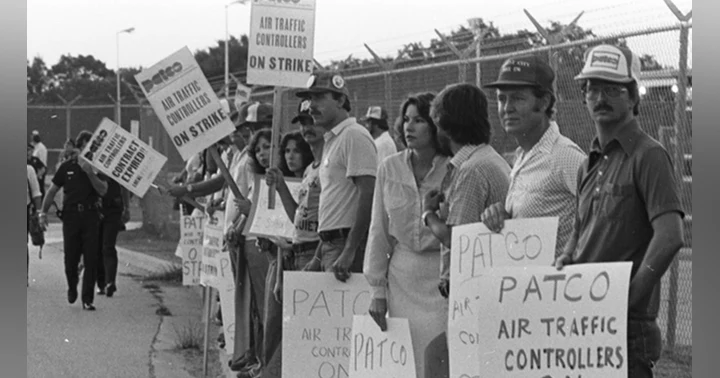
ATC: 45 Years After the PATCO Strike