CPC Training Sets Customer Service Baseline
Customer service, as the AOPA student retention survey recently reaffirmed, plays an important role in the student pilot dropout rate. As anyone who has called or visited more than one flight school can attest, the quality of customer service—good, bad, or mediocre—depends on the school’s owner.
 Over the past couple of decades I’ve visited more than a few of the 270 Cessna Pilot Centers and found their service predictably positive. This didn’t happen by accident, says CPC Manager Julie Filucci. Cessna launched its flight school network in 1973. Since then it has assessed the practices of its more successful affiliates and shared the accumulated knowledge through various training programs.
A critical component is “delivering a customer experience commensurate” with the other services Cessna provides, she continues. “As the primary point of contact with students,” to CPC customers, “flight instructors are the face of Cessna.” To ensure that CFIs put their best face forward, they each receive training that sets a how-to baseline and establishes “the core customer experience.”
Understanding how flight schools compete, Filucci’s predecessors focused on “a few key areas that we knew were differentiators.” Early on, the training was face-to-face, but it is now delivered by a 15-minute video, Checklist for Success.
Teaching the standard CPC customer experience, the video “gives flight school owners a tool, so they don’t have to reinvent the wheel every time they hire a new instructor,” she continues. Most CPCs add “flavoring, a special cast of things,” specific to their market.
The video contains no secrets. Good customer service is “not rocket surgery; two key touch points are no-brainers,” first contact with the customer and the “Discovery Flight.” Cessna’s fundamental guidance is no different than that found in hundreds of articles in aviation and business publications.
With no lack of information on how to provide exemplary customer service, the pressing question is why more schools don’t do it? Maybe it’s because no one gives them constructive feedback, which is part of the CPC culture. “Every time I walk in a CPC I’m a professional woman looking for flight training,” says Filucci. “There are times I’m happily impressed, and there are times when I gather talking points for our discussion with the flight school.”
Or maybe it just isn’t clear to flight schools why their students drop out. Most, perhaps, will mistakenly blame the cost of flying. But consider this:
A school providing good customer service, a school with instructors who relate to students as people, will know when cost is a factor. Good customer service is a tripartite partnership built on trust, with the school serving the student-instructor team as it strives for its shared goal, a successful final checkride. Unwilling to surrender their dreams, students who trust their teachers will share their cash flow concerns, looking for guidance and assistance, just as they would in a tricky crosswind.
Customers constantly bathed in poor service, on the other hand, just stop scheduling lessons without explanation. Certainly, the causes are many and cumulative. In the end, maybe the cost of flying is the reason they drop out, because few have the resources to make a substantial investment whose return wastes their time and money. — Scott Spangler
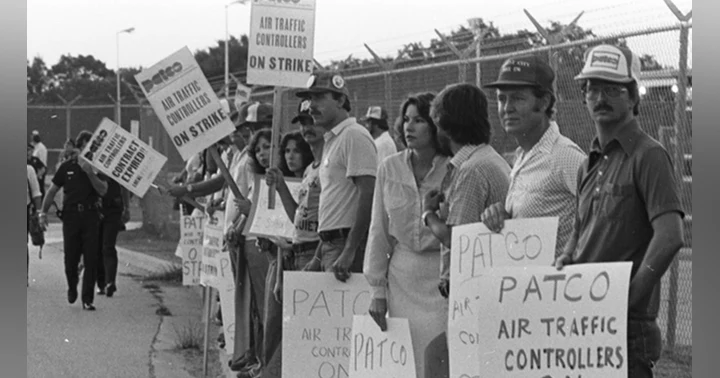
ATC: 45 Years After the PATCO Strike