Culture of Fear Suppresses Joy of Flight
More than it has in the previous two years I’ve judged an airport writing contest, fear was a central theme in the nearly three dozen essays submitted by students in elementary, middle, and high school. Most of them addressed airline flights and began with the TSA and continued until they reached the desired destination, often in Florida.
The handful that wrote about their general aviation flights also focused on their fear, but unlike all of their airline flying peers, two of them actually looked out the window and marveled at the different perspective flight gives of the world they live in on the the ground. Dismissing the easy explanation that kids today are different, looking at the world in which they are maturing, being afraid is what our culture has taught them to be.
And as their parents and grandparents, it’s our fault.
A common Facebook theme lists all the things we did as kids that kids today don’t do, from riding a bike without a helmet and walking to and from school without a guard or guide to playing outside unsupervised and without organized activities. Keeping kids safe is every parent’s responsibility, but using fear of the consequences to achieve it has the unintended consequence of suppressing rational risk assessment.
Using fear to achieve the desired outcome is a successful tactic as old as humankind. But its employment has become universally pervasive since the end of World War II. It started with the Cold War drills of cowering under our desks at school to protect us from a nuclear attack. It’s fully matured in the polarized, zero-sum world we now live in, where there is only one good and safe way.
Pick any aspect of culture—politics, religion, education—and the leaders of the factions involved will state their case that, in no uncertain terms, that their way is the only way, and all others will lead to unfortunate outcomes. These attitudes are easily promulgated with mass marketing, and they discourage the antidote, the courage to critically assess other ideas and rationally evaluate the merits—and supporting evidence—of each of them.
Reversing this culture of fear is not impossible, but it requires effort, dedication, and individual thought whose greatest challenge is overcoming our own fear of just about everything. — Scott Spangler, Editor
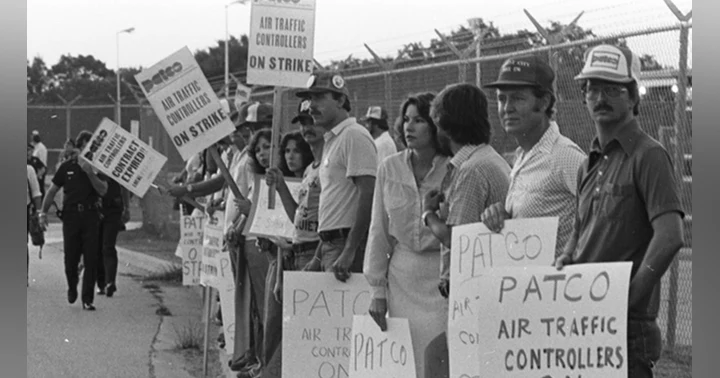
ATC: 45 Years After the PATCO Strike