Does the Aviation Industry Really Care About Pilot Population Growth?
 Given the underwhelming participation at an 1130 panel discussion about the subject the Saturday of AirVenture Oshkosh, the general answer must be a big, boldfaced NO.
For the discussion of How to Grow the Pilot Population, just seven of the nearly 100 seats in the Learn to Fly Discovery Center’s presentation area were occupied, by 2.5 reporters and 3.5 independent flight instructors (JetWhine Editor Rob Mark was, as usual, the multitasker). The National Association of Flight Instructors organized the panel, and its chairman, Ken Hoffman, completed the audience.
Some industry members proved that they truly care about pilot population growth by participating in the panel. The moderator, NAFI Mentor Editor Greg Laslo, introduced them from the audience’s left to right:
Julie Filucci, a long-time CFI, manages the Cessna Pilot Center program, and she handed out a friendly, informative learn-to-fly booklet, You Were Never Destined to be a Passenger. With more than three decades in the flight training industry, Bob Anderson manages the Remos Aircraft Sport Pilot Center program. Jennifer Storm is AOPA’s director of public relations—and a flight instructor. Eric Radtke is president (and chief flight instructor) of Sporty’s Academy. And Jason Blair, NAFI’s executive director, is a CFI, designated pilot examiner, and flight school owner.
The panel started the discussion by itemizing the challenges facing pilot population growth, starting with cost and the lack of role models, the modern-day equivalents of Lindbergh and Earhart, and finishing with an abysmal dropout rate, an anecdotal figure that ranges between 70 and 80 percent. Then it transitioned to what each member was doing to meet these challenges.
Citing the FAA’s prediction of fewer than 60,000 student pilots next year, Radtke said “learning to fly is no longer cool, so we have to get creative.” Sporty’s has been overcoming the intimidating amount of time and effort needed to become a pilot by focusing on achieving goals, like solo and cross-country flight, that are building blocks to certification as a sport or recreational pilot.
The panel agreed that light-sport aircraft, with their lower operating costs and modern systems, play a key role in attracting and retaining new students. Blair added that retaining current pilots, and returning lapsed aviators to the fold, would also slow the declining pilot numbers. (What affect the sharp decline of international students training in the US after 9/11 has on the pilot population didn’t occur to anyone in the audience or on the panel until after the forum.)
Noting that flight schools are not good at sales, overcoming that challenge might be the most difficult because it requires a cultural shift, said Anderson. The airport is an intimidating place, he said, which is why the Remos centers have had success by offering “Free Pilot Aptitude Tests” at shopping malls with a VFR simulator, which leads to a 5-hour “try before you buy” flight training package.
No matter how good they are, there are some aspects of learning to fly that no school or instructor can control, like the weather, Filucci said. Still, schools need to keep students coming to the airport for regular lessons. Giving an example of a student scheduled for three lessons a week, she said only two of them might be in an airplane, with the third in a flight training device or classroom.
Flight training as a one-size-fits-all effort no longer works, Radtke says, the learning experience must be customized to the student’s personal goals and schedules. Undertaking and enforcing this takes dedication and time, and to increase the pilot population it must be the norm at flight schools, not the exception.
If there was a consensus, it was that in the second century of powered flight—every customer counts. Whether they be a prospective pilot, active aviator, or lapsed aeronaut, every member of the pilot community counts because they sustain the aviation industry. And to keep their business, the industry must show pilots that it cares about them and is doing something to reduce the challenges they must overcome. If not, those potential and past pilots will find something more productive to do with their time and money. — Scott Spangler
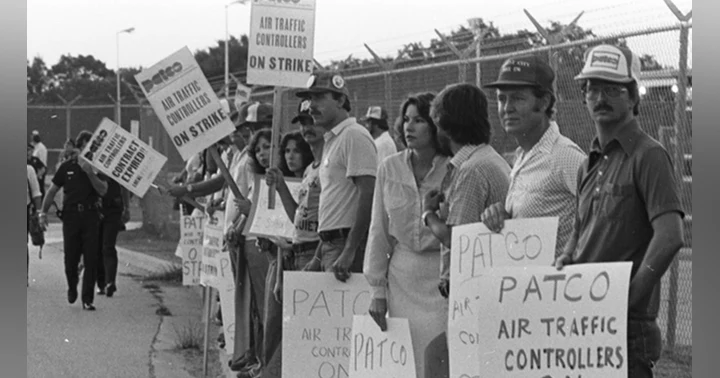
ATC: 45 Years After the PATCO Strike