Enola Gay’s Wendover Hangar On Top 11 List
 Aviation history is written by the triad of people, planes, and places, and news about any of the three always catches my attention. The National Trust for Historic Preservation recently published its 22nd annual list of the nation’s 11 Most Endangered Historic Places. On it is the hangar at the Wendover, Utah, airfield that protected the Enola Gay when the 509th’s Composite Squadron was practicing for its historic missions over Hiroshima and Nagasaki.

Waiting for the YouTube video tour to load (after shaking my head at its unchangeable headline error), my mind played the scene where a black and white Eleanor Parker, playing the wife of 509th commander Paul Tibbets and bundled up in sheepskin flight gear, collects frozen sheets from her Wendover clothesline in the 1952 film, Above & Beyond. At the same time I kicked myself for not making the short detour from Interstate 80 on my cross-country motorcycle trip in 1974. But it was August, very hot, and I was sure I’d pass that way again. But unless action is taken soon, I’ll have to settle for two out of three, person and plane.
 With several hundred others in the audience, I first met Paul Tibbets at EAA AirVenture when it was still called Oshkosh, in the late 1970s or early 1980s. I was more intimate with the Enola Gay during a tour of the Garber Restoration Facility in the 1990s. The nose with its famous block lettering was just put on display at the National Air & Space Museum, and the craftsmen were working on the rest of the airplane. Falling back from the small group I climbed on the wheeled cradle that held the tailboom, looked over the curved opening where the B-29’s tail feathers fit, and thought about climbing over it and through the manhole-size pressure door to George Caron’s tail gunner seat. Like stopping at Wendover, I didn’t do it. Its parts now reunited, the Enola Gay now lives at NASM’s Udvar-Hazy Center.


There is a bit of hope, however. Historic Wendover Airfield seems to be doing its best at preserving and restoring this historic place. It has saved the squadron building, which houses a museum, and the bomb pit, where dummy Little Boys and Fat Man’s were lifted into the belly of the Enola Gay and Bock’s Car. But the group’s last work, according to its website, was 2005, so the future seems uncertain. Let’s hope, for the memory of the people who made history, and for future generations who can benefit from history’s lessons, that making the Top 11 Endangered List will, perhaps, influence the site’s future course. —Scott Spangler
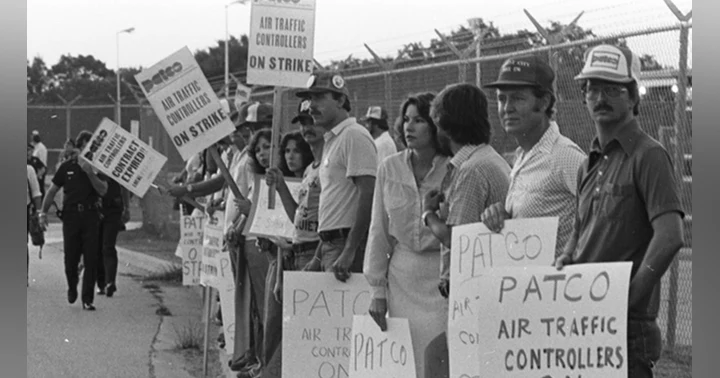
ATC: 45 Years After the PATCO Strike