Fixing Flight Training: the FT-IEP
Introduced in Fixing Flight Training: What You Can Do Now!, the flight training individual education plan, or FT-IEP, can be initiated by students, instructors, or flight schools. It has the potential to alleviate three of the four dropout motivators identified by the AOPA survey: poor educational quality, poor information sharing, and poor customer focus. A binding contract, it itemizes every aspect of training, from who’s responsible for what, and the consequences for falling short of those responsibilities.
 It need not be a complicated document. Start with the educational goal: name the certificate and/or rating desired by the student. Then itemize how the team of student, teacher, and school will measure the achievement of that goal. The appropriate FAA Practical Test Standards seems appropriate.
The educational plan is the curriculum that plots the route to the goal. During the FT-IEP meeting, attended by the student, teacher, and school, go through every step of it from first flight to test prep to checkride. Ideally, progress should be proficiency based, so students will move to the next lesson once they have demonstrated consistent ability. Lesson plans include the methods and criteria used to make those measurements.
The lesson plans that build the curriculum should be specific, covering everything from homework to pre- and post-lesson briefings and the necessary resources such as ground school courses and materials, classrooms, training aids, simulators, and training aircraft. Somehow the FT-IEP should specify the consequences for any member of the educational team who comes unprepared. Because cost is an undeniable factor in learning to fly, this seems a good option.
At some point the team should discuss money: how much the teacher will be paid for the services he or she provides. Students aren’t stupid, so break down the instructor fee. How much goes to the instructor and how much goes to the school? Take the school’s portion to the next level, dividing out health benefits, taxes, workman’s comp, profit, 401(k), and overhead.
Do the same for aircraft rental, breaking out the costs for gas, oil, insurance, regular maintenance and equipment overhauls, and depreciation. Going through the costs of these things are in themselves an important lesson for aspiring pilots. Equally important, with understanding comes acceptance by all involved. And it will be, from my experience, a revelation to most flight schools, which rarely have a formula for setting prices. As most business leaders will confirm, picking a number out of the air rarely sustains a business.”
With these prices set and explained, the team should agree on consequences for any of them being unprepared. What those consequences are depends on the team. For a student who doesn’t do his or her homework it might be an additional “remedial” education fee and “in-school suspension” spent one-on-one with the instructor in a classroom. If the instructor isn’t prepared, specify how this is measured (like when the CFI asks the student, “Uh, what do you want to do today?”) and how much to reduce the instructor’s fee. Do the same for the unavailability of school resources such as sims and aircraft.
 This might seem draconian, but remember that the team discusses its individual responsibilities and the consequences for not meeting them before any training begins. And it should have realistic ways of dealing with the unforeseen, like weather, illness, unexpected maintenance problems, and departing instructors. For example, there is no consequence with 24 hours notice of the change. What’s important is to have a plan that all agree on.
Another important part of the FT-IEP discussion is lesson frequency. In today’s time-pressured environment, every second counts and students almost always want to know how long it will take them to achieve their aviation goal. As we all know, students get there much quicker if they fly twice a week instead of twice a month. If schools track such data (and they should) the school can show students the graph that shows how quickly training time and costs grow as time between lessons increases. And schools and instructors might consider reducing the profit portion of their fees to create a “frequent student” fee. Before you start complaining, remember this: a student who finishes training spends more money than one who drops out short of the goal.
And that’s the beauty of the FT-IEP. You, whether you are a student, instructor, or school, can initiate the discussion that leads to its creation, including the components that meet your needs and circumstances. It is something you can do now! And if any member of the team isn’t interested, remember that we live in a free market, so find someone who has the integrity and courage to share and discuss every detail of a serious undertaking—and then commit to realizing a shared goal. — Scott Spangler
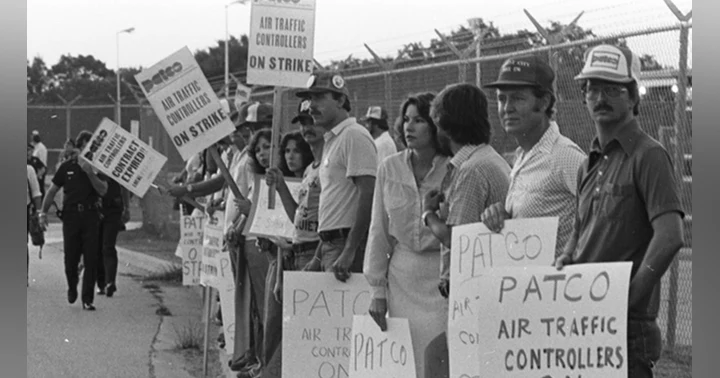
ATC: 45 Years After the PATCO Strike