Flying a Seaplane

How many times during an airline pre-takeoff briefing have you heard the flight attendant say, “In the event of a water landing …”
Trust me, there ain’t no such thing as a water landing in an airplane with traditional landing gear.
An airplane touching down on the water is a crash plain and simple … EXCEPT, when you’re learning to fly a seaplane like I did last week. My instructor, Tom Brady at Traverse Air near KTVC, probably thought there were a few times when my efforts were a bit crash like, but luckily I improved enough to pass the checkride a few days after we started. Not bad for an old guy.

I first became fascinated with the idea of these aircraft after visiting a seaplane mecca a few years ago in Vancouver where I spent the afternoon watching floatplanes of all sizes come and go. Then a local Jetwhine reader here in Chicago, Dave Montgomery, offered up some encouraging nudges until I knew I needed to make room for this in my schedule. Last week I did with my friend Matt Desch. We arrived in TVC for five hours of training in this PA-12 Super Cruiser. For a guy who’s become pretty comfortable with a glass cockpit, this was a pretty simple airplane to work with. A stick, a throttle and a couple of basic instruments. We never did turn on the radio.
Before the first lesson, CFI Tom Brady mentioned that Matt and I would never again look at water the same way. That turned out to be true. The preflight alone was different … especially for a guy like me who can’t swim.
We learned there’s a difference between glassy water and the surface when there’s even just a minor wind. Who would have thought taking off and landing on glassy water was actually more challenging than when there’s a breeze? Plow taxiing now makes sense, as does realizing when the airplane’s on the step. We learned how to take off from a confined space … seaplane talk for a short field. Water rudders? I thought those were a bit like water wings at first, but I learned when to use them and when to make sure I retracted them. Finally, there came the realization that when the engine quits on a seaplane, those floats add more drag than even I was prepared for at first. This is all the book learning part of course.

What I really loved most was the precision flying skills Matt and I both gained in just a few days.
Having spent quite a few years flying an old taildragger Champ with a stick, I found some elements of a seaplane rating similar to checking out in a taildragger, except for one. Those of you who understand wheel landings remember that touchdown is followed by easing the stick forward to keep the tail up and the rudders effective. That is the LAST thing you want to do in a seaplane and Tom Brady’s emphatic pleas early on to “don’t push forward …” didn’t take too long for me to understand. Those of you who fly seaplanes also know you can’t simply chop the power and haul back on the stick as soon as you touch the water either or you’ll skip like a flat stone on a lagoon, while pushing forward might catch a float and flip you on your back before you even realize what’s happening.

The number of maneuvers for the checkride are few. in number Most of the last couple of hours in N3071M were spent honing my skills to make great arrivals and departures under a variety of water conditions. Most gratifying of all, next to passing the checkride of course, was the hour or so before the ride when I started feeling I was becoming one with the airplane. I didn’t need to look out the window to know when the airplane was on the step … I could feel it, as well as how just the barest amount of forward or back pressure on the stick drastically altered the drag on the floats. Ha … can you feel this when you’re flying your glass-cockpit airplane?
If you’re up for a challenge to your flying skills, I highly recommend a seaplane rating … along with a tailwheel checkout of course. When it begins making sense, you’ll be amazed at the kind of pilot you can become. I found the $895 price reasonable for the training. Add another $300 for the checkride.
Be sure and tell Tom Brady in Traverse City I sent you. He’s a hoot as an instructor. He’s also a guy who really enjoys watching people walk away rated to arrive and depart on the water.
Rob Mark, publisher
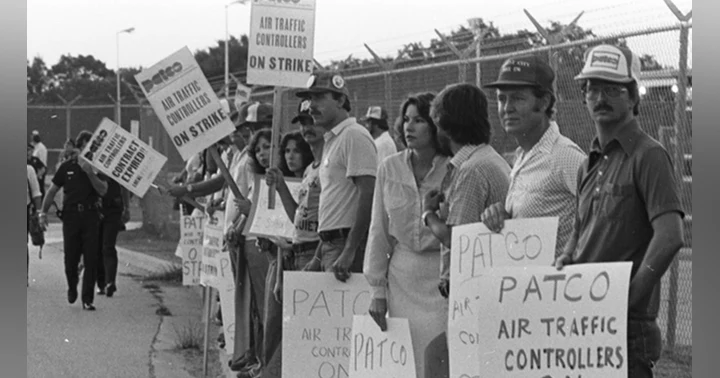
ATC: 45 Years After the PATCO Strike