Fuel Prices & Aviation Safety: Are They Related?
 Talking to friends, flight schools, and FBOs it is clear that I’m not the only one who isn’t flying as much as I used to. With avgas going for roughly $6 a gallon or more, depending where you live, direct operating costs are climbing faster than the airplanes they fuel. This begs an important question: will general aviation’s accident rate increase as flight time declines?
This subject arose during a recent lunch with Jason Blair, the new executive director of the National Association of Flight Instructors (NAFI). A designated pilot examiner and designated sport pilot examiner, he is a NAFI Master Instructor, owner of Dodgen Aircraft, which offers training and aircraft maintenance, and manager of the Allegan, Michigan, airport. Pilots are still flying, he says, but a growing number are only flying enough to meet pilot-in-command and rental currency requirements.
Common sense suggests that flying four hours a year–an hour every 90 days to log the requisite landings–does not a current, safe pilot make. But is this sense common?
| Year | Hours (000) | Rate |
| 1970 | 26,030 | 18.10 |
| 1971 | 25,512 | 18.20 |
| 1972 | 26,974 | 15.80 |
| 1973 | 29,974 | 14.20 |
| 1974 | 31,413 | 14.10 |
| 1975 | 28,799 | 13.87 |
| 1976 | 30,746 | 13.17 |
| 1977 | 31,577 | 12.91 |
Restricted supplies escalated fuel prices during the 1973 oil crisis. FAA data on GA hours flown and the corresponding total accident rate per 100,000 hours shows that the rate improved as flight time increased. So it seems that fuel prices didn’t keep pilots from flying. And industry and government efforts to improve safety had their desired effect.
| Year | Pilots |
| 1970 | 732,235 |
| 1971 | 741,009 |
| 1972 | 750,869 |
| 1973 | 714,607 |
| 1974 | 733,728 |
| 1975 | 728,187 |
| 1976 | 744,246 |
| 1977 | 783,932 |
But the laws of economics demand balance, an effect for every cause. It stands out clearly in the missing variable–the pilot population. Lack of data beyond the number of active pilots makes it impossible to know more about the 36,262 pilots who stopped flying in 1973. My guess is that most of them flew for fun, and when they had to make a choice, recreation lost. I’d also hazard a guess this also played a part in accident rate improvement.
| Year | Hours (000) | Rate | Pilots |
| 2000 | 27,838 | 6.57 | 625,472 |
| 2001 | 25,431 | 6.78 | 612,274 |
| 2002 | 25,545 | 6.79 | 631,762 |
| 2003 | 25,706 | 6.75 | 625,011 |
| 2004 | 24,888 | 6.49 | 618,633 |
| 2005 | 24,401 | 6.83 | 609,737 |
Fuel prices have been climbing for years, and the final FAA numbers for the first six years of this century, compiled by the General Aviation Manufacturers Association (GAMA), illustrate the trend that will likely continue with the final numbers for succeeding years. The accident rate is more or less stable and the pilot population and the hours they fly are in decline. The only real similarity between fuel crises past and present is increasing prices. So, obviously, safety is not a price-related problem.
Based on past experience some might say that GA will rise again. And if fuel prices go down, it might. But when the world uses oil as fast as it can be sucked out of the earth, what are the chances of that happening? And what are we going to do if fuel prices don’t abate? —Scott Spangler
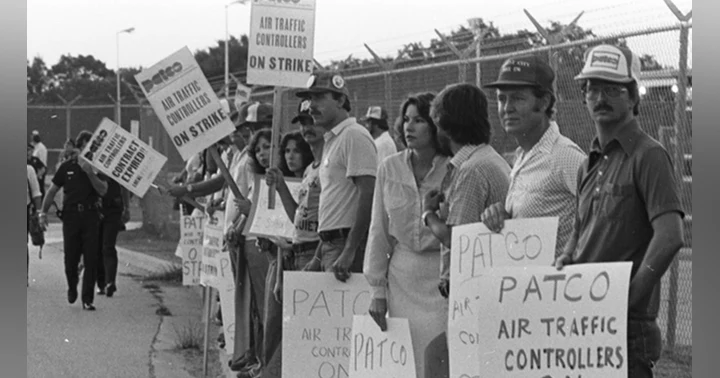
ATC: 45 Years After the PATCO Strike