Good Next Step: Advancing Pilot Community
 Certainly more details about its new Center to Advance the Pilot Community will be broadcast during October’s AOPA Aviation Summit in Palm Springs, but that doesn’t satisfy my need to know now. Ah, curiosity is an impatient task master, so I sat down with my buddy Google.
Having worked with him during my tenure at EAA, Adam Smith is an excellent choice to lead the new program. Attuned to pilots of every interest, he’s passionate and knowledgeable about not only aviation, but ferreting out the tangible and intangible things that lift their wings.
But the announcements of Adam’s appointment didn’t tell me a lot about how the new entity was going to Advance the Pilot Community. That I found further down Google’s list, in the position description of the now expired help wanted ad. By adding new initiatives to those already in place, the center stands a better chance of success than any previous effort I can think of thanks to its multifaceted approach.
 Past efforts to sustain and increase the population of pilots has focused, for the most part, on prospective pilots. While they are an important pool, AOPA rightly realizes that they aren’t the only pool. Pilots now flying and those who used to fly are just as important, if not more so because they have already made the cut by earning their pilot certificates.
Return to the Sky is a new AOPA initiative, and I can’t describe it any more concisely than the position description: “Too many able, medically certified pilots are not flying. A major focus of the Center will be to assist the community in reigniting non-flying pilots’ passion for flying and getting them back in the left seat.”
This works in harmonious concert with the Flight Training Initiative that AOPA launched in 2010. It’s now entering the third phase of programs and activities designed to increase the number of students who being—and complete—flight training.
Perhaps the Center’s greatest challenge will be creating the sense of community among pilots that AOPA’s research revealed as important to them. One of the Center’s priorities is creating virtual and face-to-face opportunities that are a catalyst motivating pilots to engage with their colleagues “in ways that are collaborative and reaffirming.”
That’s a tall order for a group known for its independent ways. This is probably why the position description’s first item “Consumer: The underlying theme of the Center is “we take a pilot’s point of view’. This includes probing the user community to gather intelligence (specifically about the experience of being a pilot), creating expectation for the flight training experience, awarding excellence, providing guidance on evaluating products, and influencing the marketplace.”
Given this, the Center to Advance the Pilot Community will include a research and technical assistance component that ensures new efforts are based on qualitative and quantitative research and to evaluate their effectiveness. With what seems to be all the necessary pieces in place, I can’t wait to see the Center begin its work. — Scott
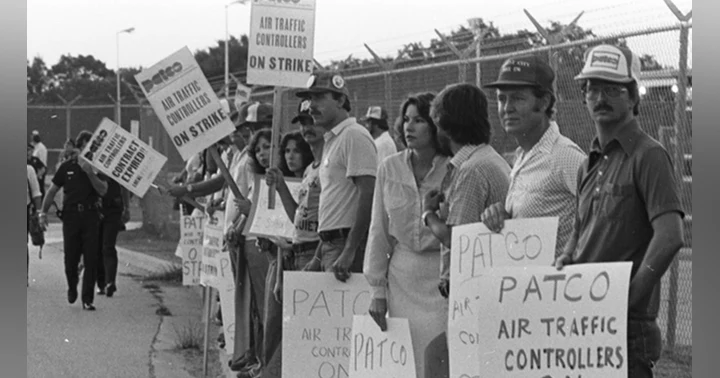
ATC: 45 Years After the PATCO Strike