Labor Day 2011
In our house when I was a kid, Labor Day was always a big celebration. My father retired at age 65 from life as a union plasterer, a profession few people can even define today. My grandfather on my mom’s side, John Kikulski, was one of the first presidents of the Amalgamated Meat Cutters Union in Chicago in the early 1920’s so that side of the family understood union cards, worker rallies and strikes pretty well.
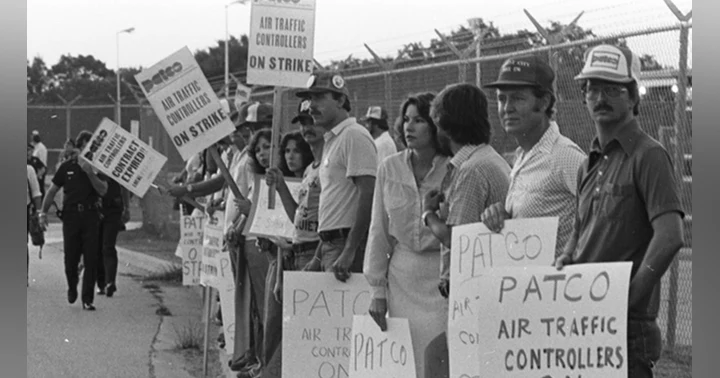
I carried it all down for a portion of my life as a member of the Professional Air Traffic Controllers Organization (PATCO), National Air Traffic Controllers Association (NATCA) and the AirLine Pilots Association (ALPA). Today, having run CommAvia for 16 years, being part of those groups seems as if it happened to me in another life. But much of what I learned in those years of working for someone else still sticks pretty closely with me.
 Where We Came From
Labor Day began with an 1894 request from then President Grover Cleveland in an attempt to satisfy the demands for such an event from the unions and also — Cleveland hoped — to help end a crushing strike against the Pullman Railway Company in Chicago. He eventually sent 12,000 Army troops to Chicago to help squash the strike, which led to the death of two-dozen workers. Imagine a Democratic president in the U.S. trying something like that today should ALPA walk out at United Airlines.
Looking at the state of the economy here in the U.S. today though, makes me realize that many of the same issues labor fought for a hundred years ago may have fallen to the sidelines for awhile, but are still around if anyone chooses to notice.
In the early 1900’s, work life in the United States was tough, with people struggling to make ends meet, while the controllers of capital had the easy life. Some thought the analogy of famous CEOs stealing the food right out of the mouths of hungry workers and their families captured the sentiments pretty well, hence the robber baron label attached to the George Pullmans, John Rockefellers and the J.P. Morgans of the time.
Today, much is the same here in the states, although we must clearly acknowledge that the life of the average working stiff is not much better in other parts of the world either. Hundreds of American companies have shipped tens of thousands of jobs overseas to take advantage of cheaper labor in the past few decades, something that in a capitalist society they are perfectly free to do of course. Those cost-cutting measures have kept millions of Americans out of the labor pool as companies have stashed billions of dollars in cash in the kitty for a rainy day, unwilling to reinvest that cash here in the U.S. — as in hiring more employees.
But Americans have also, to a degree, created the atmosphere that allowed this to happen. Most Americans believe unions and the larger labor movement have little value, assuming that they MUST perform precisely what their companies demand, precisely the way they demand it. People under 40 these days can’t imagine standing up to management, saying no or fighting back for a better standard of living. They simply quit and begin elsewhere all over again.
The question this Labor Day though is not simply where this is all headed for the working stiffs of the world, but where is that capitalist America we’ve all grown up with headed? Business says it has no confidence in the American economy and hence can’t imagine spending its cash here. Or is this – as some Democrats claim – all some part of a grander idea to be certain our current President Barack Obama falls flat on his face in front of the nation so a Republican candidate can take his place?
 No matter the ultimate strategy, this kind of war against labor — union or non — can’t continue for much longer before our nation begins to split at the seams.
So here’s a piece of simple and free strategy for any of the Republicans reading this. You could build some tremendous admiration for big business in this country right now — Obama or not — if you began reinvesting some of the billions you’re making overseas back here in the states. Next November, you’d have millions ticking the ballots for the Republicans if you did too.
Me, I wouldn’t vote for the Republican anyway as you might have guessed, but I’d sure give those CEOs and shareholders a tip of my hat for doing the right thing to put the country — and millions of hard-working Americans — in the money again.
So come on Apple and Walgreens and Office Depot and Dell and Halliburton and a thousand others and all those shareholders of course. How much money in the bank is enough? Don’t Americans at least deserve the opportunity to TRY and help your companies make a profit here in the states?
I think they do.
Rob Mark, Publisher
ATC: 45 Years After the PATCO Strike