On the Record – Max Trescott … CFI, Entrepreneur
 Are you serious about a flying career? Then you’ve probably already heard someone speak to the value of a Flight Instructor rating because it offers an opportunity to build flight time until you get hired by the airlines or with a corporation. Almost without question though, if a pilot mentions teaching people to fly for a living, the laughter is bound to be loud. That’s because many of the folks who work hard for their CFI only make the effort because they want to fly, not teach.
With the severely reduced experience standards required at the regional airlines, there will be even fewer pilots choosing a flight instructor rating, especially of course, those who never wanted to teach in the first place.
So first a disclaimer.
If you have absolutely no interest in learning why a career as a professional flight instructor is worth pursuing, stop reading now. If you’re not even remotely curious about why a great flight instructor needs to also think like a business owner/operator, click that little red “x” in the upper right corner of your screen now because I can guarantee you’re going to be bored.
But, if you’re even the least bit snoopy about how one flight instructor I know – Max Trescott – has managed to make teaching people how to fly – and writing about teaching people to fly – a business he enjoys and is paid well for, read on. Who knows, you might just walk away with a fresh opinion about teaching.
And in answer to the question I know I’ll receive, why Max? Because being the 2008 National Flight Instructor of the Year counts for quite a bit in my book. Max is the fourth one I’ve had the pleasure of knowing and honestly, some of their enthusiasm is rubbing off on me. He’s also a NAFI-designated Master CFI.
Max Trescott and I have not known each other long. In fact, we’ve never met face to face, although we will at the upcoming aviation blogging conference we’re organizing at AirVenture 2008. Being a curious sort, Max and I connected first through Jetwhine when he e-mailed to say hi and ask a few questions about me and the blog.
He mentioned he too was an author and pointed me at his blog … Max Trescott on GA. I was impressed right off the bat because Max has not only taken the time to learn all he can about teaching people to fly, but he’s gone out on a limb to express his opinions more than once, not an easy task these days.
An Opening
Essentially, Max created an opportunity when we began talking, the key word being opportunity since neither one of us knew precisely where that might lead the time we first connected. It was clear early on that Max had a head for business which as a CFI means you don’t simply wait for the right chance to pop up, you help create it.
Your flying skills may open the door to an interview someday, but no matter how skilled you are as an aviator, it is your personality that is going to decide whether your career takes off or drags you under the waves like someone who once crossed Tony Soprano.
Knowing Max for just a short time has opened my eyes to the fact that I truly miss teaching people how to fly myself. That’s something I’m in the process of fixing even as we speak as well as picking up the Master CFI designation. That means Max created value for me in our relationship early on. And that’s what a good instructor must do as well, not simply be the person to train people to yank and bank, but be the lead to how valuable learning to fly will be in someone’s life, a topic I mentioned here a few weeks back.
I began our chat wondering how long Max had been a pilot and instructor. I was quite surprised at his reply. “I’ve been flying recreationally all my life. I think I took my first demonstration flight when I was ten, started flying lessons at age 15, and picked up my instrument rating in 1988,” Trescott said. “I didn’t pick up my first instructor rating until 2001. In fact that’s a ride I can’t forget because I took it on September 10, 2001. My Instrument-Instructor ride came in 2002 and my Multi-Instructor in 2003. I began instructing part time on weekends and didn’t begin full time though until 2005.”
When I worked at my first Part 141 school in the 80s, I was expected to find my own students or at least convince the people who walked through the door that I was the guy they wanted to learn to fly with. I enjoyed the challenge. I also brought some aircraft sales experience to my job as a CFI.
Trescott said, “Me too. I worked in marketing at HP for many years and always knew I wanted to run a business of my own. Before I left HP, I think I also understood quite a bit about the service culture in which we live and the need to create value for the customer.” Everything didn’t work out perfectly for Trescott right out of the box however. “My first business after HP was not aviation related, and I terminated it after only a couple of months primarily because the customers in that industry were not nearly as enjoyable as the people I met teaching part-time. So I decided to make the independent instructor thing work full-time. One solid inspiration for me was Greg Brown’s book, “The Savvy Flight Instructor.”
“I wanted to run a business and realized I’d need to analyze the marketplace, figure out how to differentiate myself from the pack and then develop a strategy to go after that piece of the market,” Trescott says. He now specializes in teaching the glass airplanes like the Cirrus and the Cessna 400 (the former Columbia). “I’ve tried to set myself up as an expert in the niche and people refer business to me now. I also realize how important it is to refer people the other way, so as much as I like flying tail wheel airplanes, I send those folks to someone else. I think it’s critical that I, as an instructor, appear as the trusted aviation advisor rather than simply someone looking for all the business he can find.”
Part of owning a business means looking for potential customers. Trescott does that mostly through personal referrals and his web sites. He’s written one book, Max Trescott’s G1000 Glass Cockpit Handbook with WAAS and also sells CD-ROM courses including a WAAS and GPS CD ROM Course, and these also result in people seeking his services.
He admits too that blogging has made him a bit of an activist. Max is the incoming president of a regional airport support group which has put him right at the leading edge of controversy. Although he teaches primarily at the Palo Alto, CA airport, the adjacent Reid-Hillview Airport is a place some of the locals would like to shutdown. “CFIs shouldn’t simply look at themselves as pilots,” Trescott added. “CFIs should be advocates for aviation, consultants to their clients. I always encourage people to get involved with their industry and stay abreast of the issues that can affect their success.”
Did I mention that Max Trescott is paid pretty well as an instructor? He charges $80 per hour based upon his experience. But then, he runs the business and sets the rates.
At those regional airline jobs everyone wants … they pay about $20-22 an hour for first officers expanding to almost $38 after five years. At American Eagle, a captain would need to work 14 years to approach the pay rates of Trescott as a professional CFI.
So how do you define professional pilot?
*************************************************************************
From the Editor: Are you a Jetwhine subscriber? Details are in the upper right-hand column above or at www.Jetwhine.com. And please do pass this post along to anyone you think might also enjoy a blog of “aviation buzz and bold opinion.” Thanks.
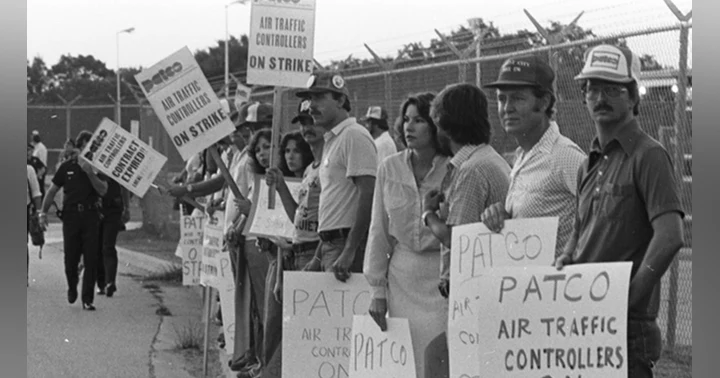
ATC: 45 Years After the PATCO Strike