Pitch & Power and the Margin of Error
A recent issue of AOPA’s Flight School Business included this story: FAA Updates CFI Renewal Clinic Guidelines. It referenced the updated advisory circular that covers FIRCs and noted that the FAA added angle of attack (AoA) to the list of core subjects the renewal clinic must address.
 That should be interesting because angle of attack is the root of an enduring aviation debate that correlates pitch & power with altitude & airspeed. This requirement will certainly lead to some spirited discussions and diagrams at FIRCs nationwide, but what was behind its addition?
The answer was in Appendix 1 of AC 61-83G, under Item 5: Safety Trends in GA: How CFIs Can Directly Contribute to Aviation Safety. To summarize, the non-commercial, non-corporate general aviation accident rate has been trending lower over the past two decades. To continue that trend, the FAA added A0A because it’s related to seven of the top 10 ways pilots kill themselves—low altitude maneuvering and loss of control.
Everyone involved has done an admirable job in making aviation safer, and the low rate we’ve had for decades suggests that it is the margin of error. In statistics I learned that this margin is an unavoidable fact of life. My prof said it grows as the data pool shrinks, so it makes sense that the accident rate—aviation’s margin of error—is up a tick. The shrinking pilot population is flying fewer hours. Explaining the statistical version of a pilot-induced oscillation, the prof also said trying to eliminate the margin usually makes it worse.
 In simple terms, small fluctuations in the accident rate are not caused by previously unrecognized deficiencies in training. Even though we all know better, at an unfortunate moment a pilot inadvertently forgets the intimate relationship between pitch & power and the resulting altitude & airspeed. Adding angle of attack to the FIRC curriculum will not save them because no aviator—no human engaged in any activity—is immune from a momentary case of the stupids.
Come on, be honest. At least once we’ve all inadvertently done something that scared us poopless. What we each have done is not really important, unless we did not learn from the experience. Inadvertently discovering new learning experiences is is acceptable, so long as they are in no way related to same fundamental cause.
Hmm, because so many accidents are related to pitch & power, adding AoA to the FIRC requirements seems like a good move. Unfortunately, it will not change the outcome. A zero accident rate is an admirable goal, and one we must always strive for, but we must never forget that its unattainable. Every year a small percentage of pilots will hurt or kill themselves no matter how well they have been trained or how professionally they fly. — Scott Spangler
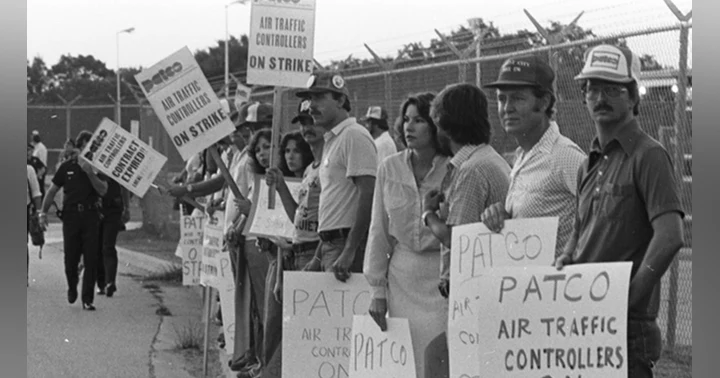
ATC: 45 Years After the PATCO Strike