Planes & Trains: A Cautionary Tale
After World War II the airlines sealed the fate of railway transportation by offering an equivalent level of reliable, safe service more expeditiously. After more than a half-century of being the only way to go, the airlines grew increasingly dismissive of the people they supposedly served, all but shaking them inverted by the ankles to capture spare-change fees before folding them into a barren tube. And this after the government has disrobed them at the airport doorway. Stir in misguided management focused on quarterly bottom lines, and it’s wonder that the airlines are in decline.
 At the same time, the number of people traveling by train has been increasing, its growth limited by its atrophied infrastructure of rails just 56.5 inches apart. In early December my wife and I needed to be in Reading, Pennsylvania, for the wedding of her youngest son and for interviews and photos at the Mid-Atlantic Air Museum for an in-the-works article. Anticipating the multi-flight airline trip with the enthusiasm of a death-row inmate about to roll up his sleeve, on a whim we visited the Amtrak website, which proved a welcome surprise.
Our combined round-trip fare–which included sleeping accommodations and all meals–totaled $580, an amount about equal to the fees the airlines, as best as I could discover, would charge above and beyond the ticket price for baggage and other “services.” Granted, the train travel takes time. The Capitol Limited left Chicago at 1840 Central and arrived in Washington, D.C., the next day at 1340 Eastern. After a 2 hour layover, we’d board the speedy Northeast Regional Acela express for Philly. As railway virgins, we didn’t know what to expect, but we agreed it couldn’t be any worse than flying the airlines. It wasn’t…it was way better, and like many of the people we met along the way, we’ve become railway converts.
Everyone we met, from trainmen, conductors, and attendants to counter clerks, security personnel, and our fellow passengers were, if not downright happy, at minimum in a good mood. Unlike the aggravated, anxious, aggressively rude misanthropes at the airport, from packed waiting rooms to the exclusive waiting rooms to the sightseeing car, people were polite, relaxed, and smiling. The security matched that of the airport—without the striptease: the ticket clerk asked for a photo ID. In Philly it went a step beyond: a dog leashed to an armed law enforcement officer sniffed each of our bags before we got on the train in Philly.
 As sleeping car passengers we were directed to the Metropolitan Lounge in Chicago and D.C. An expansive room decorated for the holidays and filled with over-stuffed chairs and couches, it offered free snacks and drinks and flat-panel TVs. An attendant announced our train for preboarding and walked us to it. It reminded me of the first-class airline lounges of the 1970s I saw only from the outside, and in the movies. We made our dinner reservation upon boarding and ate real food (pork tenderloin and salmon for me on the outbound and return trip, and veggie lasagna and salmon for my wife), with real silverware, on a real table cloth with linen napkins.
 At dinner we ate community style, with unrelated passengers taking seats until each table was full. Like most of our railway conversations on the train and in the waiting rooms, it didn’t take long before someone asked, “Why are you taking the train?” On the Limited, roughly a third were on business, a third were on vacation, and the rest were traveling for a multitude of reasons, from a new job to a family emergency. Regardless the reason, almost everyone expressed a hatred of flying. Not fear of being up in the air, just a seething dislike of anything related to the airlines. The only time I saw people getting truly cranky is when they started talking about their last airline experience. And then they would go silent, look out the window, and let the passing scenery soothe them.
 When talking with business travelers I probed their need for speed, the airlines’ primary selling point. Their responses confirmed what I’d learned from time in a corporate structure and its myriad planning meetings and approval channels: very little happens at the last minute and most deadline rushes are the result of procrastination and poor planning. Train travel not only gives you time for one last pass through the presentation before delivering you relaxed and refreshed, said one business traveler, it also gives you time to contemplate what you’re doing, to make sure it fits well in the grand scheme of things. Too many of today’s problems are the result of thinking about a decision after it’s made and acted upon, which brings us right back to procrastination and poor planning.
On our way back to Chicago, the Capitol Limited suffered a 2-hour delay because an important safety item—the horn—went in-op during then night, a malfunction exploited by the snow and sleet. Somehow, they made up a half hour of the delay, but it allowed us to sleep in. We pulled into Chicago at 0930, and it was clear it had been snowing seriously for some time. The TV news said more than 200 flights at O’Hare had been cancelled, and we might have been among that stranded mass of humanity had we not been a bit adventurous.
The chances that the railroads will regain their passenger supremacy is slim because the time, money, and land needed to rebuild its steel circulatory system is prohibitive. But the railway’s good service and other amenities will, I believe, continue to nibble away at the airline’s passenger pool. And the airlines, arrogant in the notion that they are the only viable transportation option, will accelerate their passengers’ defection with an increasing array of higher fees and poorer service. — Scott Spangler
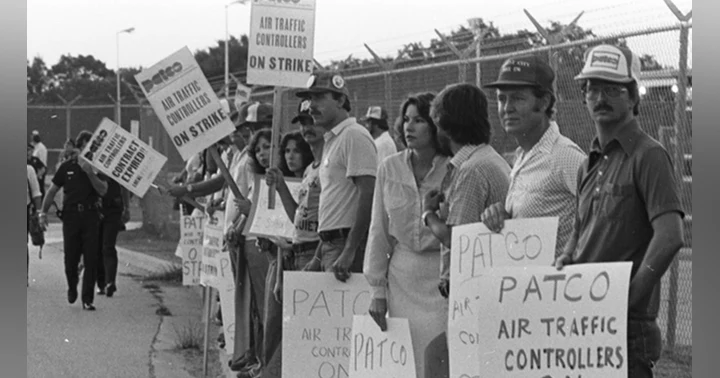
ATC: 45 Years After the PATCO Strike