Playing Jeopardy with Aviation’s Future
That Future of Flight Training session at AirVenture a few weeks ago left me feeling pretty cranky … whiny even. Not because of the session itself. All the folks on the panel, including moderator Greg Laslo, couldn’t have been nicer.
But we all walked away from the discussion with the same thought … now what? Considering the lousy turnout, as Scott Spangler mentioned last week, I left wondering how anything we spoke about could in any way affect how the management types view flight training or its foundational position within the industry? 
So here’s an idea, let’s not make the argument for flight training any longer.
Let’s focus the light where it really needs to be, on the Big Picture, where everyone claims they’re looking anyway.
Without pilots, there is no aviation industry, period. No Part 135 charter, no corporate flight departments, no sightseeing flights and most of all, no airlines … nothing.
We need to stop pussy footing around trying to grab a few new students here and there to fly our shiny new Cessnas, and Cirrus SR-22s and Piper Warriors. Let’s be serious, none of the previous incarnations of any Learn-to-Fly programs have ever come even close to returning us to the old days when 17,000 new airplanes were delivered in a year and a commensurate number of pilot starts kept the Government Printing Office in business producing student pilot certificates. We’re all so focused on Learn-to-Fly though as the solution as if the only audience we need to succeed with are those potential customers for flight schools.
Another Perfect Storm?
We all hate listening to the fact that 75 percent of new student starts last year quit before they ever earned their Private Pilot certificate. But for the moment, how we deal with that one issue is irrelevant.
The Big Picture question really is why only a few of us appear to see the writing on the wall … that very soon, we’re again going to be short of qualified pilots not simply to teach people to fly, but with the commensurate skills to compete for professional pilot cockpit jobs coming down the road?
Making matters worse is that fewer and fewer young people see flying as a career … starting pay is almost food-stamp level and the amount of debt to pay for the training is beyond most. The military long ago dried up as a viable source of pilots and the passing of HR 5900 — the Airline Safety and FAA Extension Act – that could force airlines to require an ATP from all candidates (with a few exceptions) will only make the situation worse. We haven’t even spoken yet about the rash of “Fly-til-their-65” airline pilots who will very soon be grounded.
It’s time we stopped looking at each individual business as separate from what make aviation fly … airplanes. No pilots, no FBOs … no pilots, no need for many training airplanes … no pilots, no need for airlines, no pilots, no need to see John and Martha much down the road. But we all seem to look at the shortage of people learning to fly as if it really has nothing to do with these individual segments … but it does, all of them.
A Bright Spot
At AirVenture this year, I met a really bright young Singapore Airlines pilot who was just crazy in love with aviation. One reason he was so enthused was not simply because he had a job, but because he’d always wanted to fly but was successful even though he lacked the funds to pay for the training. Originally from Mumbai, he mentioned it was a tad more expensive there to learn to fly.
So how did he reach the skill level of licenses and hours necessary to get hired by Singapore? Easy. He didn’t. He was hired through Singapore’s cadet program, better known to us here in the states as an ab initio training system.
Singapore paid for all his flight training from his private right up through his turbine time via a Lear 45 type rating. His total time is somewhere in the neighborhood of 350 hours and he’s soon off to school on the Boeing 777 all at the expense of Singapore Airlines. His commitment to Singapore for their commitment to him … seven years of his life after he completes training.
In the U.S. of course, no such programs exist. Our airlines — in fact every organization that uses pilots in this country — assumes the pilots should bare the costs of learning the ropes because that’s the way we’ve always done it. This strategy of course makes pilots rather expendable when it suits the company. That strategy is going to begin biting us all in the butt pretty soon though.
Our Future
“This whole pilot shortage thing doesn’t seem that bad to me,” a fellow told me at AirVenture over a cold drink one afternoon. I asked this young man to consider that the only item that has kept this pilot shortage chaos from running rampant right now is that our economy tanked which forced many companies to lay off crews. But that life preserver is going to sink once we’re all back in business again.
Think back though, to just a few short years ago when anyone with a pilot’s license was being hired and upgrade times were shoving questionable captains into a command role, a topic that forced some of the recent regulatory chaos in the aftermath of the Colgan crash in Buffalo.
 The question again is why we aren’t working as a group on this. Wait you say? What about DOT Secretary Ray LaHood’s Future of Aviation Advisory Committee (FAAC) seminars coming soon to a town near you?
With only Cessna’s Jack Pelton representing general aviation vs.. a slew of airline and airline union people, I doubt LaHood’s future will have much to do with people learning to fly. Of course, I could be wrong. Let’s take a look at the agenda for this week’s meeting in Chicago. There’s NextGen, and Financing, Safety, Competition, the Environment and Work Force Issues. Nope, nothing about the foundation of the industry there.
If these sessions are really about the future of our industry, it’s time someone thumped Mr. LaHood on the back of the head and told him that without a steady supply of men and women to drive these ever-evolving aerial machines, there won’t be much of an industry for aircraft manufacturers like Cessna, Boeing, Airbus, Embraer … the list goes on. That also mean the parts and service suppliers are going to get a whack as well. Flight training is simply the foundation upon which our industry is built … and trust me, the low-fuel light is on and no one seems to notice, or if they have, they seem clueless to solve the problem.
Now if, as some industry insiders have told me, the LaHood shows are simply PR fluff to make it look like someone is taking action, then I say shame on Mr. LaHood — as well as our President — for wasting a precious opportunity to actually use the experts gathered together for these little pow- wows to try and solve some of the problems we’re desperately struggling with in the industry.
If these FAACs aren’t fluff, and if you really believe that a steady supply of pilots is critical for success, why is Cessna CEO Jack Pelton the only man in the room representing the general aviation side of the world … the foundation of our industry?
What’s it going to be? Are we going to build yet another general aviation Learn-to-Fly program to encourage more people to take to the air or are we finally going to gather the industry’s best and brightest together — the Cessnas, the Boeings, the John and Martha Kings, the Garmins, the airlines, the FBOs, the charter industry and people from every other segment of the industry to solve the problem?
If we don’t, there’s no need for a Flying magazine, no need for Aviation International News, no need for Avweek, and certainly no need for @flightblogger, or @avweekbenet, no @getintheair, no Airplane Geeks podcasts and of course, no @jetwhine. Without a way to encourage people to choose aviation as a career, we won’t need any of this.
Whatever we do, we’d better get moving pretty quickly. Pilots are turning away from the industry much faster than they’re signing up. If we’re going to gather all these experts together, lets put them to work on a problem that needs solving … building a foundation for every other element of the aviation industry. That’s a Big Picture idea.
Visit the FAAC page here and tell them you’re mad as hell and you’re not going to watch our industry crumble while the politicians play pretend. The next FAAC meeting is in Chicago on Wednesday, but here’s a thought. When the invites go out for that next Big Picture meeting, let’s not invite the people who put that guest list together for our Transportation Secretary because it’s pretty clear they don’t have a clue.
Rob Mark, editor
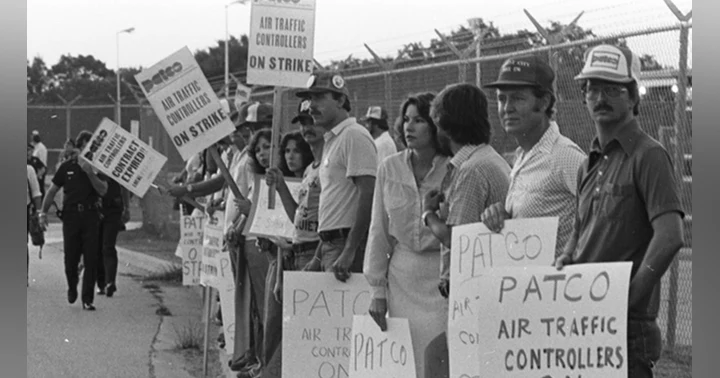
ATC: 45 Years After the PATCO Strike