Read Past the Headlines for Details of Aviation’s Future Pilot & Maintenance Needs
Google Alerts is an efficient way to keep pace with the global aviation industry. But to mine prognosticative details about aviation’s future, one must read past the headlines.
 In a recent media release, “Boeing Projects Requirements for More than One Million Pilots and Maintenance Personnel Over Next 20 Years,” my headline happiness was an inaccurate ethnocentric response. The first paragraph seemed to support my assumption that America would need 466,650 pilots and 596,500 maintenance personnel “to accommodate the strong demand for new and replacement aircraft,” which was based on the crew assessment forecast in Boeing’s Current Market Outlook, a comprehensive analysis of the commercial aviation industry.
What struck me odd, however, was the dateline: Singapore. Reading further, why Boeing made this announcement at the recent Asia Pacific Airline Training Symposium in Kula Lumpur made perfect sense. The majority of those one million aviation jobs—180,600 pilots and 220,000 mechanics—will be needed in this region, with the largest share in China, 70,600 pilots and 96,400 maintenance people.
A global sum, Boeing based its one million number on the projected delivery of 30,000 airliners by 2029. North America will need 97,350 pilots and 137,000 mechanics; the release didn’t itemize the projected needs of the United States and Canada. Dividing these totals into an annual need results in just 4,867 pilots and 6,850 mechanics.
This is a sobering view of the looming “pilot shortage” in America. Today, 105 accredited collegiate aviation colleges and universities are members of the University Aviation Association. Unable to find a current summary of their combined enrollment, it seems a safe assumption, however, that their graduates may overwhelm the demand in these career fields.
As a consequence, it could be safe to assume that the economic laws of supply and demand will reduce the number of students pursuing these fields, thereby reducing the number of available programs and increasing the tuition the survivors charge. This will likely cause all but the most passionate aviation hopefuls to look at other career fields, which might just be a supply sufficient to meet demand.
The Boeing release tacitly supports this possibility. It quotes Roei Ganzarski of Boeing Training & Flight Services: "To accommodate this growing demand, it will be vital to match training with the learning styles of students to come. As an industry, we need to adapt to the learning styles of tomorrow’s technologically savvy pilots and mechanics, and ensuring that training is globally accessible, adaptable to individual needs and competency-based."
 His “growing demand” seemed out of place, until I remembered that he was focusing mainly on the Pacific Rim, not America. Still, the point seems clear: aviation as a whole must adapt to a new economic order. And it must factor in further changes, no matter how silly they seem by current standards. Raise your hand if you remember the conversations that riffled through the industry when Boeing and other OEMs reduced the number of cockpit seats to two.
The point man on this seems to be Michael O’Leary, CEO of Ryanair, who said in an interview with the Financial Times, “Really, you only need one pilot. Let’s take out the second pilot. Let the bloody computer fly it,” which is the reality today, except for takeoffs and landings.
The reporter buries the relevant point in the fifth paragraph: “If times were lush, rival airline executives could afford to ignore him. In recent years, with much of the global industry struggling to survive, O’Leary’s subversive vision looks like a viable alternative to the status quo, which is threatened by obsolescence, attrition, and consolidation. He says what the others are thinking, and, more often than not, doing” [Emphasis added].
My point is to not paint a gloomy future. Rather it is to connect seemingly disparate harbingers of what tomorrow may look like, because success rewards the prepared and penalizes the surprised. — Scott Spangler
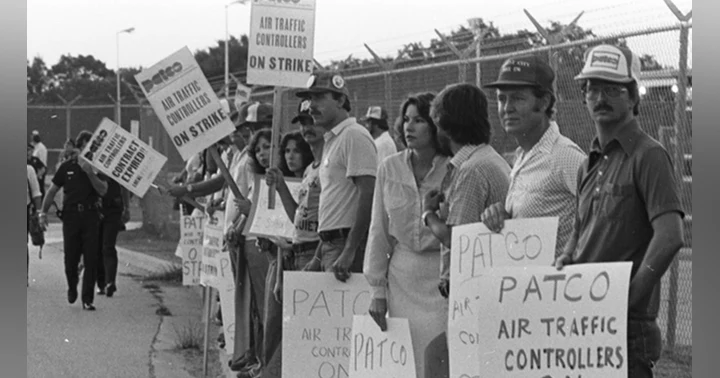
ATC: 45 Years After the PATCO Strike