Smart Swarming at Southwest Airlines
 Anyone who has blogged for more than a week will tell you that new media writers don’t press keyboards because we crave the fame and fortune of a successful media empire like Jetwhine (ahem). Most of us have long ago learned to cope with those accolades. It’s the prospect of regularly meeting fascinating people from all around the globe that really gets my blood pumping.
Just such an opportunity appeared a few weeks back when I stopped in for lunch with some of my blogging pals at Southwest Airlines’ Dallas HQ. Emerging Media Director Paula Berg told me there was this really smart fellow that I simply had to meet, although she admitted she didn’t completely understand everything he said all the time.
At lunch, Paula made him sound like a bit of a rocket scientist when she explained the swarm-like theory of airline finances he’d been working on. Of course, I had absolutely no idea what that meant either, but the next thing I knew, I was sitting in Doug Lawson’s office in an obscure part of the central hive that is SWA HQ building.  I knew right away he was a numbers guy when I walked in … no windows. Communicators go mad in those kind of places.
Doug, a Ph.D. and the airline’s Manager of Financial Analysis, was a likable fellow right away, even if most people probably think he needs a haircut. I think it perfectly set the stage for the scientific theory that was to follow. “What exactly do you do at Southwest Doug?” I asked to prime the pump.
“I’m a living systems engineer,” Lawson replied. He didn’t even pause to let it sink in on me. “I try to improve the service experience for our customers by using living system principles.” I looked at Paula with a bit of a “I see what you meant,” sort of look. But I listened more closely because it was clear from Lawson’s facial expressions that he knew he, at least, was on to something.
“The components that make up our customer service experience, like the actual number of service desks at the airport, or the number of agents ready to take care of people, or the actual functions they perform and when … all must be as reactive to the world around them as the customer. And people never act the same way in the same setting. Their behavior is influenced by their surroundings.” At times the conversation assumed the tone of a pure theory, but clearly the goal for Southwest is to process the greatest number of passengers as possible using the fewest resources necessary to maintain the quality of the experience.
 “We’ve tried, through computer simulation, to convert customer insights about our service into living things, so to speak, things that have memories, that we can quantify into costs. Those things, those insights must survive on their own too,” hence the swarm theory Lawson explained. The swarm concept evolved comes from the study of insects that learn and survive based on the experiences of the smartest among them. Lawson calls his system “VIV,” Roman numerals for life. I simply called it Viv.
At Southwest, Doug’s theories mean experiences must justify their costs to remain viable parts of the customer experience, six service counters rather then eight, for example. It was beginning to make sense, especially when Lawson added that he designed the software to run all the simulations for these events to see what kind of life they might take on.
Boarding Group A, 1 through 30
Remember all the hubbub last year when Southwest changed it’s boarding process? That was Doug and his team after watching thousands of computer simulations with little stick people trying to board a 737. “We found you don’t always get a nice wonderful solution either.” He used plenty of WILMA in there too during the calculations, short for the “window, aisle, middle seat organizational concept” Lawson explained when I raised my hand to ask. “We want people to board quickly. Getting off is no real problem. We tried computer sims boarding five rows at a time in a variety of sequences and it was a mess. Simply boarding the back first didn’t necessarily help either.” But they figured it out and developed the current system of group boarding by number after exhaustive testing. He showed me too, why my idea of using the back door for boarding sounded good, but really didn’t save what it cost to use.
Or imagine something we all take for granted like which gate we’ll arrive at when we land at MDW, DAL or DIA. Lawson’s team watched thousands of hours of additional simulations – 200 days worth per city in fact – to try and get it just right, so the airline doesn’t pay for unused gates nor make passengers wait on the ground because there are too few gates when needed. Doug’s simulations also decide how many people need to be at each gate at what time to make the arrival and departure work like clockwork.
I would have kept asking more questions, but the communications people let me know it was time to let Doug get back to playing the Southwest version of the Sims. Is a living systems engineer a necessity? Compare the bottom lines of Southwest against United or US Airways or American and you’ll see Doug’s stamp of success everywhere. Works for me.
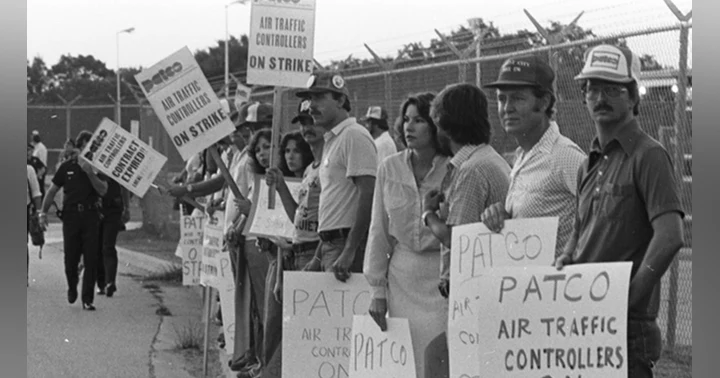
ATC: 45 Years After the PATCO Strike