TSA is after General Aviation this Time
Lame ducks they call them … those federal employees who wander aimlessly between jobs every four years. The FAA’s Bobby Sturgell is a prime example – as of course is George W. Bush – although honestly no one  expected to see Sturgell in this role. The FAA administrator job was altered a decade ago specifically to insulate the position from the chaos that erupts during every election cycle. But a year ago, the White House and Congress botched the transition when Marion Blakey left which means acting administrator Sturgell will most likely be looking for a new job in January along with thousands of other political appointees. But Sturgell likes making speeches, so maybe he’ll head out on the circuit.
The more traditional and much more important element of a lame duck’s role is the inability – good or bad – to accomplish any meaningful work. To his credit, Department of Defense Secretary Robert Gates put the Air Force tanker acquisition process on hold last month because he realized that a new policy enacted by his department just before an election might well be undone by the new president anyway.
The TSA’s Kip Hawley apparently didn’t get the lame duck memo. And because of that, business aviation, in fact, just about all flying not related to the airlines is about to become a whole lot less user friendly. Remember the user-fee war? Think much worse.
Hawley’s growing federal TSA kingdom on which the taxpayers have spent tens of billions of dollars since 2002 recently let fly with a 260-page Notice of Proposed Rule Making (NPRM) that is certain to have far ranging effects on everyone who flies an aircraft. For now, the TSA’s public affairs office said the NPRM TSA – 2008 – 0021, is only available on the web site and is due to be officially published in the next few weeks.
TSA has decided that after years of listening to the airlines complain about how unregulated the rest of the aviation seems to them – marketing geeks call that a competitive disadvantage – each and every aircraft not categorized as an airliner now represents a threat to life as we know it and to every American citizen. Although the proposal specifically addresses Large Aircraft (weighing more than 12,500 lbs), like the promises made during the user fee war, no one in their right mind believes this law will not eventually filter down to aircraft under 12,500 lbs. For starters though, most turbine-aircraft operators will be subject to the TSA’s new compliance doctrine. Read expensive and time consuming. Let me see, now who would benefit from seeing that happen to business aviation?
 TSA’s reasoning? … “as vulnerabilities and risks associated with air carriers and commercial operators have been reduced or mitigated, terrorists may view general aviation aircraft as more vulnerable and thus attractive targets. If hijacked and used as a missile, these aircraft would be capable of inflicting significant damage.”
If the NPRM becomes law, aircraft operators will be required to regularly complete a security audit for starters to prove who is in command of the aircraft. Security of personnel is what business aviation pilots do all day long. The fact that the a business aircraft has never been hijacked in the U.S. and the fact that the benefit of a business aviation environment is precisely that the crew ALWAYS know their passengers seems to be lost on TSA.
No More Mr. Nice Guy
Hello Kip. What about port or fuel-truck security? Did you ever watch 24 or read “The Sum of all Fears?” There are much easier ways to wreak havoc on America than grabbing a business jet. Let’s be secure, but let’s not spend billions more fixing something that isn’t broken. This administration has been writing checks for years that are going to bounce after January 20th and we all know it.
Business aviation operators rightly believe the TSA should be charged with proving the need for further security regulations first rather than simply forcing them down the throats of operators. But scaring people and shoving them into action has been the MO of the White House for the past eight years, all in the name of protecting us from some global threat. This time the cure is worse than the disease. And this time we must draw a line in the sand, but do it in a way that makes the rest of the nation realize we are already a very secure form of transportation.
I recall meeting a young woman who worked for the National Air Transportation Association a few years ago who eventually moved on to a job at the TSA. NATA president Jim Coyne told me in Chicago that he hoped having this woman on board TSA meant she might help convince the other bureaucrats that GA has never been a threat. So much for that idea.
On the NBAA message boards, the people who will most directly be affected by the new rules were quick to comment. One said, “The TSA is a bureaucracy … they never die and they never go away. They just fight for more budget share … They are run by bureaucrats who don’t know or care about us or anyone else, just the growth of their little dung hill. They can only be restricted by Congress.
My friend Bill Quinn, chairman of Aviation Management Systems said, “The value of your flying skills notwithstanding, risk management is essentially what many of you out there do for a living every day of your professional lives. The average person and even our airline counterparts don’t come anywhere close to employing the same protocols and disciplines we utilize every day to maintain the integrity of our security.”
Some pilots have already announced their intentions to not dignify the TSA proposal with a response. That would be a mistake, as would be giving the mainstream press an opportunity to view business aviation as anti-security. It is time to come out of our self-imposed security closet and begin telling people a little more about what we business aviation folk do for a living. It’s time we demanded some accountability from our legislators for the laws some federal agencies attempt to enact rather than simply hoping they’ll fix a problem for us after TSA puts us on the run as they did the airlines.
Bill Quinn added, “Lets face it folks, if we don’t rise to the occasion with one voice, or in Congress with other voices, we are going to pay a price for security that will be very expensive. Like many of you who participate with the NBAA in this forum, and in other ways, I place a high degree of value on what the NBAA can offer through their lobbying efforts. I don’t always agree with how they approach things, or their opinions, which is to suggest that I definitely ‘don’t drink the cool aide’, but my experience to date is they have at least been willing to march into battle on the hill on our behalf and that is worth something to me.”
Jeff Beck suggested the time has come for the two largest aviation organizations in the nation – NBAA & AOPA – to work together. I agree. 450,000 phone calls and e-mails can raise some serious awareness. Quinn agreed but made it clear that, “our leaders in this segment of the industry have a real challenge ahead of them.”
Nov 4th: Just Around the Corner
Under our current Republican form of government we elect people to Congress every few years to act on our behalf. The only way to kick out the current stable of politicos that have any sway over the appointees is by getting out to the polls in a few week and putting someone in the White House who you believe will listen to the needs of this industry.
Ready to comment on the Large Aircraft NPRM? Not so fast. Remember, the TSA put the notice on its web site before it was published in the Federal Register. Stay tuned. We’ll publish the link to the NPRM comment section as soon as TSA releases the information.
If you thought this election was going to be important, you know now that it’s going to be more important than you can possibly imagine. Don’t blow it. Call, e-mail, or fax them. Trust me, even though they’re out of the office, they’ll get your message. Then vote on November 4th.
And hey Bobby, before you leave office, could you please do something really nice for the industry as sort of a going away present? See that Kip Hawley gets a copy of that lame duck memo. Thanks.
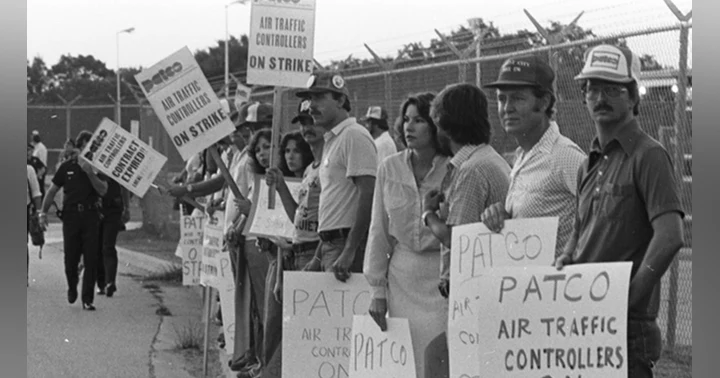
ATC: 45 Years After the PATCO Strike