What’s Aviation’s Future in a Polarized World?
 At the World Aviation Training Symposium, held last week in Orlando, Boeing’s chief test & evaluation pilot for new airplane development, Mike Carriker, said the industry must modernize its educational methods and technology if it hopes to prepare pilots and technicians to “maximize the capabilities of today’s high technology airplanes.”
While aircraft and teaching technology have “evolved exponentially” over the past half century, aviation training has not progressed beyond the rote regurgitation of knowledge and skills that satisfy disassociated evaluation tasks. Few will disagree with his assessment that the industry must now employ modern methods and technology in competency-based training not only to make the global transportation efficient and economical, but “to reestablish the aviation industry as an attractive career option.”
Given our entrenched political, economic, and social polarization, there is little or no chance that the industry will make this needed transition. It matters little that, according to Boeing’s annual Pilot & Technician Outlook, that we must educate a million new pilots and technicians in the next 20 years. In the zero-sum game that is modern life, ideological preeminence is more than the common good.
The labels assigned to the diametric opponents is not important. Red or blue, liberal or conservative, rich or poor, have or have-not, what matters most is ultimate domination. And for one side to win, the other must lose. Despite their dueling delusions of the one perfect way, both sides share two common traits, hypocrisy and fluid self-interest. If you doubt this, watch The Daily Show, which satirizes each side’s all-or-nothing ethos.
Overcoming polarization, not to mention flying safely, requires two related skills no longer emphasized in American classrooms: critical thinking and complex reasoning. Teachers do not show students how to evaluate both sides of something and suss out their related causes and effects because they do not have time. They barely have time to pound the answers for prescribed assessment tests in their students’ rote memories.
Growing up in this educational environment encourages polarization because it teaches people to accept information from authoritative sources at face value. Absent critical thinking, they accept the source’s particular spin without question. A good example is the looming debate on federal student loan interest rate, which will double to 6.8% on July 1, if Congress does not act.
 This is directly related to the modernization of aviation training, much of which is acquired through collegiate degree programs. The imbalance between a new pilot’s loan burden, which typically is in six figures, and the low five-figure starting pay, is a leading reason why the career’s appeal has been in decline. And aviation is not the only career suffering this malady.
Stemming the consequence of polarization and reversing their damage is a two-part process. Part one is investing the time and effort critical thinking-complex reasoning require. Part two is summoning the courage it takes to oppose our zero-sum culture and stand up for what’s right, not who’s right. This is no simple decision because it ensures retribution from both sides, but, as shown in The Emperor’s New Clothes, it is eventually effective.
Perhaps the most important question is this: is the future of aviation, and our society, important enough for us to stand up to both sides and speak our minds, to demand specific answers to difficult questions, and to hold decision-makers consistently accountable? — Scott Spangler
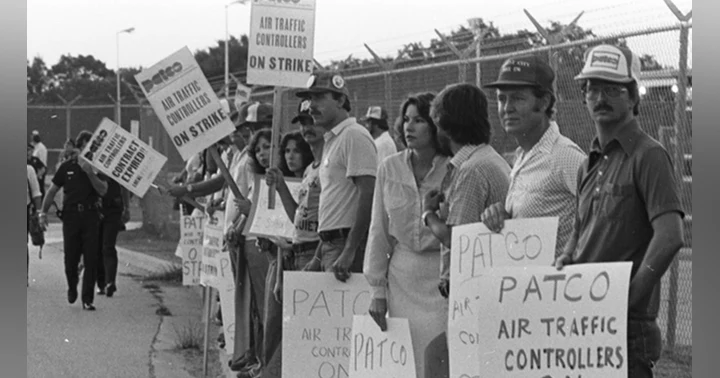
ATC: 45 Years After the PATCO Strike