Without Planes, Small Airport is a Museum
 Working my way around Lake Michigan last week, I passed a small airport in Northport. This village of 526 people is at ring-fingertip of lower Michigan’s left-handed mitten. The fieldstone terminal with a conical roof in bumble-bee colors on its open-air observation area was worth a closer look.
Nothing outside identified the airport or whom to call for assistance, but the payphone worked! The doors were locked. Window peeking, the building was empty, except for a few bicycles, a gas grill under a tarp, and a hand-painted sign leaning against a wall: Woolsey Memorial Airport.
Ready for a stroll after hours of sitting behind the wheel, I paced off the 2,600-foot north-south and 3,600-foot east west runways that meet at the windsock. Lights with clean, clear lenses poked out of yellow cones. Rocks with a recent coat of yellow paint spelled out the airport’s name. The grass was neatly trimmed and rolled smoother than my backyard.
As I walked toward three hangars at the west end of the runway, an eerie feeling that something wasn’t right grew stronger. Looking closely, it dawned on me that there were no signs of aeronautical life at this pristine little airport, no bald patches of grass at the runway approaches, no wheel ruts leading from the hangars. It was like being alone in a museum diorama showing what used to be.
 With an Internet connection I learned that Leelanau Township owns and operates the airport that is home to six airplanes. The four singles, a twin, and an ultralight average log half of the airport operations, which average 42 a month between April and October, when the grass is not snowed over.
An August 15, 2010 story in the Traverse City Record-Eagle summarized the airport’s genesis. The airport’s namesake, Clinton F. Woolsley, a Northport native, was an Army Air Corps pilot who died in a midair in 1927 during the inaugural goodwill flight to 23 Central and South American nations.
 So his son’s memory would not be lost, Woolsey’s father donated 80 acres to the township with the stipulation that it be used as an airport. The township added another 120 acres, the Works Progress Administration turned it into the memorial airport that was dedicated on July 14, 1935.
 “On summer weekends, you can often see a few private airplanes parked there,” the story reported. The annual Lions Club Fly-In Pancake Breakfast is when the airport is the busiest. But not on this sunny Saturday, with a steady breeze wafting in from the north. But my visit was at summer’s end, when those with summer homes in the areas had returned to their metropolitan lairs to the south. Still, it was a worthwhile visit, an opportunity to survey the museum from its elevated, open-air observation area and daydream of what it might have been like on a long past mid-summer weekend when flying was more popular than it is now. — Scott
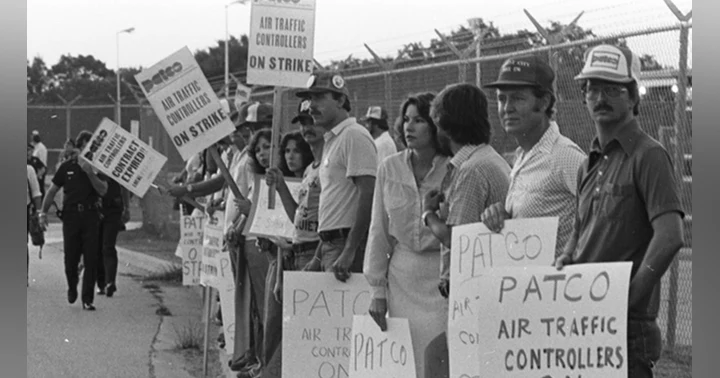
ATC: 45 Years After the PATCO Strike