Friends, Forecasts & the Future of Aviation
 Most of my friends and acquaintances are, in some way or another, involved with aviation. Talking with them over the past months, the future of aviation seems to be the discourse destination of choice. On the whole, their outlook on aviation’s future isn’t good.
As might be expected, this consensus can lead to a semi-permanent state of depression. The best antidote I’ve so far found is Nate Silver’s excellent book, The Signal and The Noise: Why so many predictions fail—but some don’t. An infinitely complex subject, accuracy begins with the forecaster’s predictive personality, either a hedgehog or a fox.
These classifications were described by Philip Tetlock, a professor of psychology and political science at UC-Berkeley who named them after the main characters in a story by Leo Tolstoy. To summarize their differences, the fox knows many little things from different sources, the hedgehog knows “one big thing.”
Most of my friends and acquaintances are, it seems, hedgehogs, that Silver accurately described as “Type A personalities who believe in Big Ideas.” A few, and I include myself in this category, are foxes, those who “believe in a plethora of little ideas and in taking a multitude of approaches toward a problem.”
All-in individuals, aviation’s hedgehogs predict doom for aviation’s future, especially GA, citing everything from the decades-long decline in the pilot population, the price of airplanes and fuel, and the time and effort it takes to become a pilot whether it is for pleasure or a profession. On these metrics, I agree that aviation will never return to its former glory of the 20th century, but the probability that it will cease to exist is unlikely.
Changes in demographic factors, led by shrinking median income and attention spans, easily account for the decline in the pilot population. But passion is an almost immeasurable factor, and for those whom aviation is their one true passion, they will make the sacrifices necessary to fly. If you want to know who these people are, walk up and down the lines of homebuilt airplanes at EAA AirVenture.
Also in this group are the aviators in the North 40, owners and pilots of store-bought airplanes. A straw poll of the people I met there revealed that they fly not only for fun, but in furtherance of their business, indications that they have the income—and tax deductions—to sustain flight. Related to this group are the business-only aircraft that serve corporations worldwide.
Drawing on a number of different economic, technology, and social indicators, the probability that commercial aviation will continue its 20th century ways seems increasingly slim. In less time than most people think, the number of pilots in a commercial cockpit will decline in number and then leave it all together for a command and control center.
 The technology is there. As discussions of recent accidents have shown, pilots today are more into system management than sticks and rudders. With the new ATP requirements for first officers, and the shrinking pool of applicants, to meet the requirements, airlines must either pony up and pay for pilot training, or find a way to reduce the number of pilots in the cockpit.
Given the employment practices MBAs have pursued over the past three or so decades, and given the advances in technology, the latter solution seems more probable than the former. Supporting this are the growing number of university aviation programs that are creating drone degree programs. And there are 25 applicants from 25 states vying to become one of a half-dozen FAA approved drone test sites. — Scott Spangler, Editor
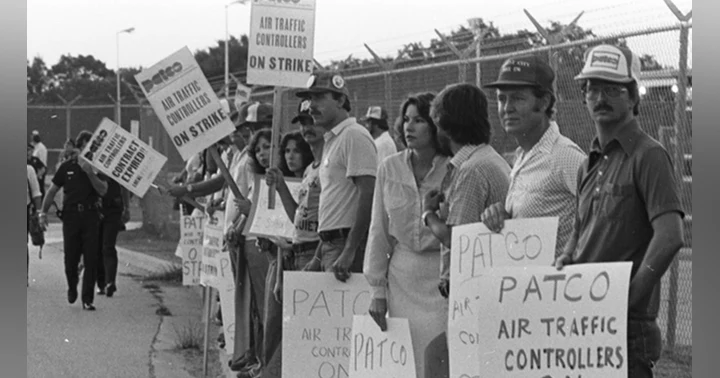
ATC: 45 Years After the PATCO Strike